India-specific · Sport guide
Best Sunglasses for Cricket Players in India
Cricket is one of the most demanding visual sports. Ball tracking, pitch reading, glare from white clothing and outfields, mixed light across long innings — the right sunglasses make a measurable difference. Here is what to look for.
🕑 7 min read🏏 Cricket🇮🇳 India-specific
In this article
- What cricket demands from sunglasses
- Best lens tints for cricket
- Wraparound vs standard frames for cricket
- Photochromic lenses for day-night cricket
- Best Rawbare picks for cricket players
What cricket demands from sunglasses

Cricket is played in intense, uncontrolled natural light for hours at a time. The visual demands are specific: tracking a small, fast-moving ball across variable backgrounds, reading pitch conditions, judging trajectory and depth — all while managing glare from white clothing, painted pitch markings, and bright outfield grass.
Standard fashion frames fail on the cricket ground for four reasons: insufficient peripheral coverage lets debris in; non-secure frames move when turning to field; non-polarized lenses create glare that affects ball tracking; and dark tints in overcast conditions over-darken the visual field.
The core requirement
For cricket, the priority order is: UV400 first, then polarized for glare, then contrast-enhancing tint for ball tracking, then secure wraparound fit for fielding. All four together make the biggest difference.
Best lens tints for cricket

Amber / Brown
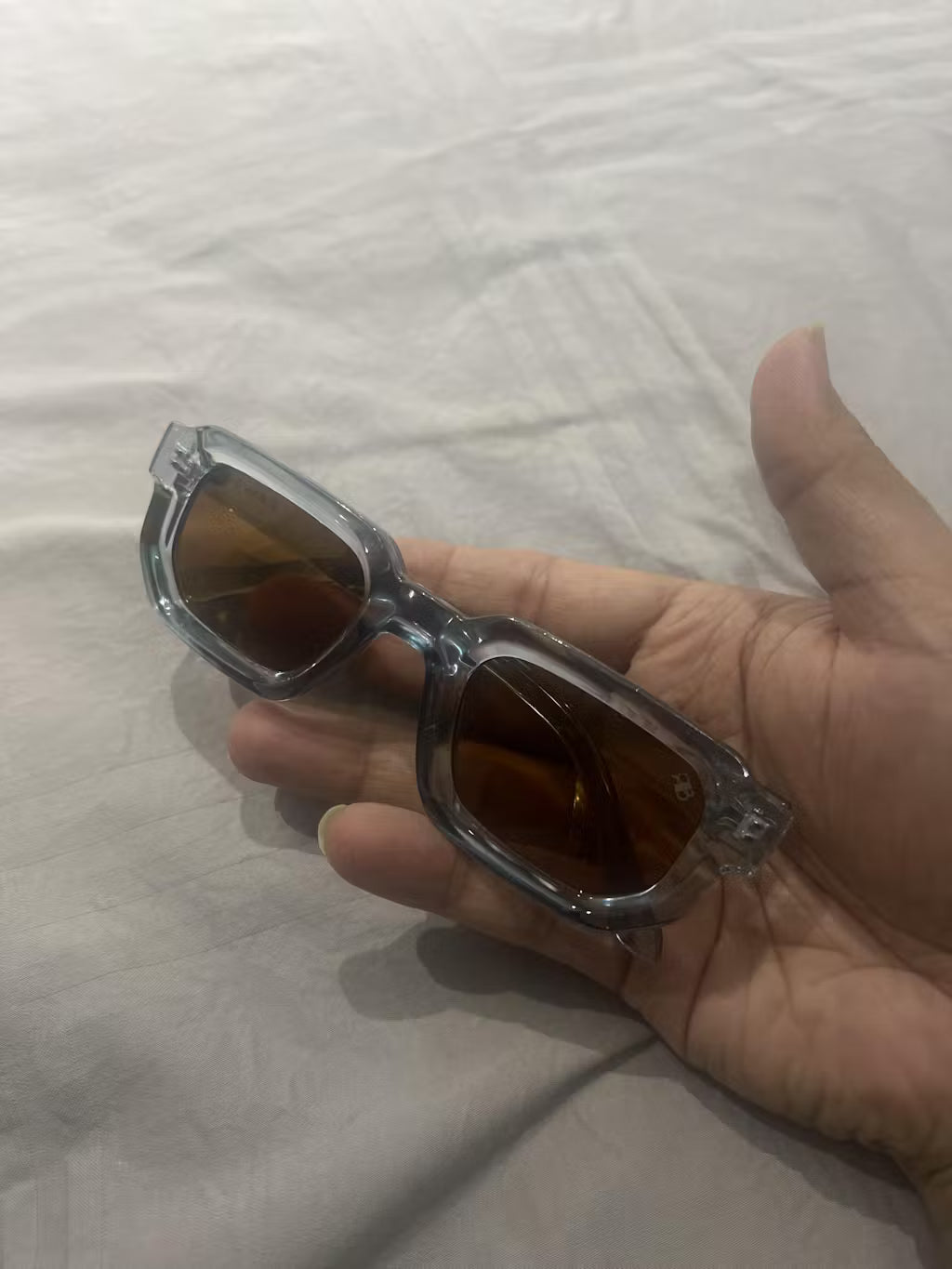
The top choice for cricket. Enhances contrast and depth perception — makes a red or white ball stand out against sky and outfield.
Orange
High contrast enhancement in varying light. Works well for day-night conditions where the ball changes from red to white.
Grey
Most neutral — good for bright afternoon play. Does not enhance contrast as much as amber but provides the most natural colour rendering.
Photochromic
Auto-adjusts from dark to light. Best for day-night matches and grounds with mixed shade and open sections.
Wraparound vs standard frames for cricket

For active fielding — running, diving, turning sharply — wraparound frames are the correct choice. They cover peripheral vision, stay in place during sudden movement, and prevent dust or debris from entering from the sides.
Batsmen and wicket-keepers who prefer standard frames can use them at the crease, but any position requiring active movement in the field benefits from the additional security of a wraparound fit. TR90 frames with non-slip nose pads provide the best grip in humid conditions.
Photochromic lenses for day-night cricket

Day-night matches present a specific challenge — light conditions shift dramatically from afternoon sunlight to artificial floodlights over the course of a single innings. Photochromic lenses that auto-darken in bright conditions and lighten in lower light remove the need to swap frames between sessions. The transition takes 15 to 30 seconds — fast enough for most situations.
For pure day cricket in consistent bright conditions, fixed amber or brown polarized lenses provide better contrast enhancement than photochromic. The photochromic benefit is most pronounced in variable or mixed-light conditions.
Best Rawbare picks for cricket players

Polarized wraparound with orange-amber contrast lens. The combination of wraparound coverage and contrast-enhancing tint makes ball tracking easier in bright conditions. TR90, non-slip nose pads.
PolarizedUV400WraparoundContrast tint
Photochromic wraparound. Adapts automatically as light conditions change across a long match. Polarized and UV400. The best single pair for variable match conditions.
PhotochromicPolarizedUV400Wraparound
Polarized UV400 rectangle frame. For players who want a standard frame at the crease or a pair that doubles as everyday wear. Amber-brown tint enhances pitch contrast.
PolarizedUV400Rectangle
One more thing
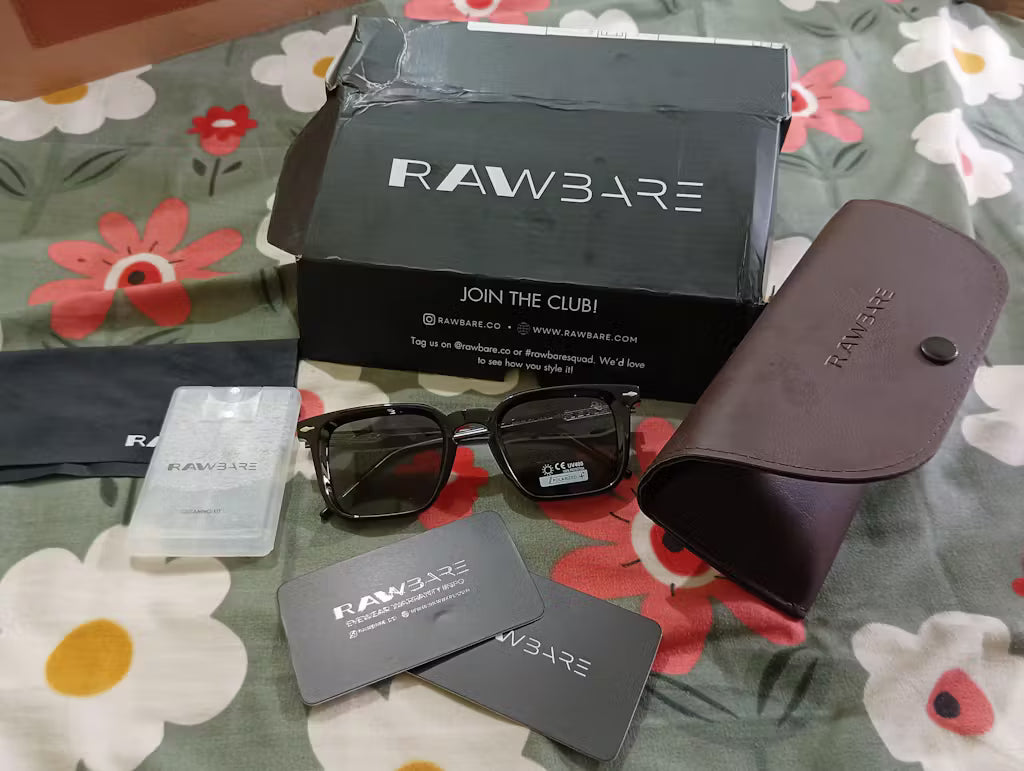
Every Rawbare frame comes with a 6-month warranty and a hard case. The case matters for cricket — leaving your sunglasses loose in a kit bag with pads and balls will scratch the lenses within one season.
Browse the Rawbare Sports Collection.
Key takeaways
✓ UV400 is the baseline — always verify it
✓ Amber and brown tints enhance ball-tracking contrast
✓ Wraparound frames essential for active fielding
✓ Photochromic best for day-night and variable light matches
✓ Store in hard case — kit bags destroy lenses
Frequently asked questions
Q1 Do professional cricketers wear sunglasses while playing?
Yes — fielders regularly wear sunglasses, especially in bright conditions. Batsmen use them less often at the crease but commonly wear them between overs and while fielding. Many international players use sport-grade polarized frames specifically designed for ball tracking.
Q2 Can sunglasses affect your ability to track a ball?
Yes — both positively and negatively. Poor-quality lenses with optical distortion make it harder to judge ball trajectory accurately. High-quality polarized lenses with contrast-enhancing tints actually improve ball tracking by reducing glare and sharpening visual contrast.
Q3 What tint is best for cricket?
Amber and brown tints are generally preferred for cricket. They enhance contrast and depth perception, making it easier to track a white or red ball against the sky, pitch, or outfield. Grey tints are more neutral. Avoid very dark tints in variable or lower light.
Q4 Are photochromic lenses good for cricket?
Yes — particularly for day-night matches or grounds with mixed shade and sunlight. Photochromic lenses automatically darken in bright light and lighten in low light, removing the need to swap frames as conditions change.
Q5 How do I stop sunglasses from slipping during cricket?
Choose frames with a wraparound fit and non-slip nose pads. TR90 frames have a natural grip that improves slightly with sweat rather than sliding. Avoid metal frames with smooth nose bridges for sport use — they slip easily in humid conditions.