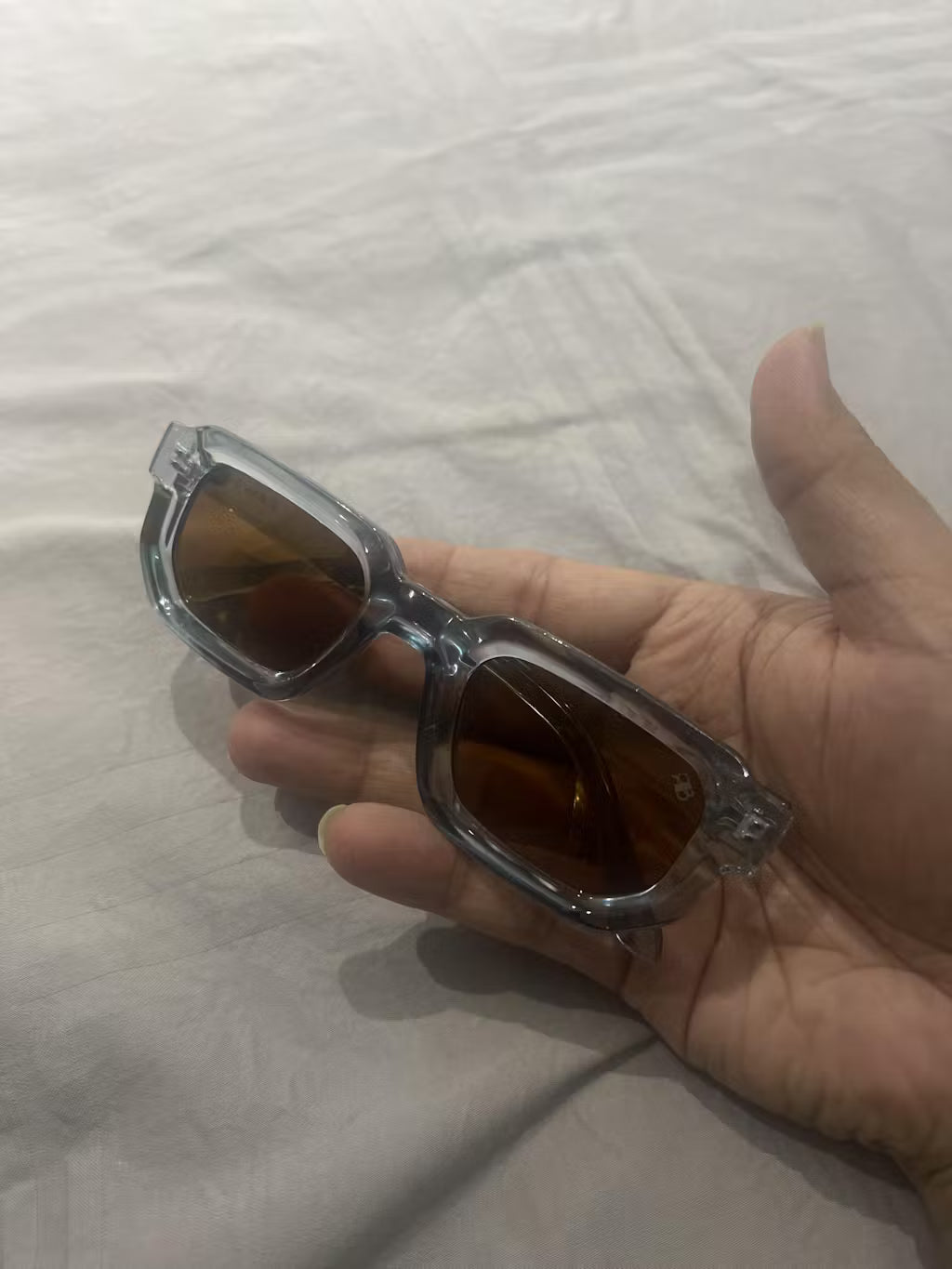

The Anatomy of Sunglasses: Every Part Explained
Frame & Construction
The Anatomy of Sunglasses: Every Part Explained
Temples, hinges, nose pads, rims. Knowing the parts of a pair of sunglasses helps you describe a problem, judge quality, and choose a frame that will actually be comfortable.
In this article
- The front: frame, rims and lenses
- The bridge and nose pads
- The temples and temple tips
- The hinges
- End pieces and the brow bar
- Why each part affects comfort
- Quick reference: parts at a glance
- Frequently asked questions
In one sentence
A pair of sunglasses is built from a front frame holding the lenses, a bridge and nose pads that rest on the nose, two temples ending in temple tips that hook over the ears, and hinges that connect them, each part shaping how the pair fits and feels.The front: frame, rims and lenses

Frame front and rims
The front is the main body that holds the lenses and sits across your face. The rim is the part of the frame that surrounds each lens. Frames can be full-rim (the lens is fully enclosed), half-rim (enclosed only on part of the lens), or rimless (the lens is held without a surrounding frame).
Lenses
The lenses are the tinted, protective elements you look through. They carry the tint, the UV protection, and any polarization or finish. The lens is where eye protection actually happens, which is why its specification matters more than any other single feature.
The bridge and nose pads

Bridge
The bridge is the section of the frame front that spans the gap between the two lenses and rests over your nose. Its width and shape are a major factor in whether a frame sits high or low and how secure it feels.
Nose pads
Nose pads are the small pieces that rest directly on either side of the nose. On many metal frames they are separate, adjustable pads; on many acetate frames the bridge itself does this job. Good nose pads spread weight comfortably and stop the frame slipping.
The temples and temple tips

Temples (arms)
The temples are the two long arms that extend back from the frame front to your ears, holding the sunglasses on your face. Their length and flex determine much of the fit. The size numbers printed inside the temple, explained in our sunglasses size guide, include temple length.
Temple tips
The temple tips are the ends of the temples that curve over and behind the ears. Soft or grippy tips improve comfort and keep the frame secure, which matters most during sport and movement.
The hinges

Hinges
The hinges are the small joints connecting the temples to the frame front, letting the arms fold in. They are one of the most stressed parts of any frame, so hinge quality is a good indicator of overall build. Some frames use spring hinges that flex outward for a more forgiving fit.
End pieces and the brow bar

End pieces and brow bar
The end pieces are the outer corners of the frame front where the hinges attach the temples. The brow bar is a horizontal bar across the top of some frames, most recognisably on aviators, which adds both structure and a distinctive look.
Why each part affects comfort

Comfort is the sum of these parts working together. The bridge and nose pads decide how weight rests on your nose, the temples and tips decide how securely the frame holds without pressing, and the hinges decide how the arms sit against your temples. A frame that feels wrong usually has one of these elements mismatched to your face, which is why understanding the parts helps you choose well. To match a frame to your features, see our guide to sunglasses for your face shape.
Quick reference: parts at a glance
| Part | What it does |
|---|---|
| Frame front / rims | Holds and surrounds the lenses |
| Lenses | Provide tint, UV protection, and any polarization |
| Bridge | Spans the nose and sets how the frame sits |
| Nose pads | Rest on the nose and spread weight |
| Temples | Arms that hold the frame to the ears |
| Temple tips | Curved ends that sit over the ears |
| Hinges | Joints that let the temples fold |
| Brow bar | Optional top bar adding structure and style |
A note from Rawbare
Across every Rawbare frame, the lenses carry 100% UV400 protection as standard, and each pair is backed by a 6-month warranty. Explore the collection to see the construction up close.See the construction at Rawbare


Key takeaways
The frame front and rims hold and surround the lenses
The bridge and nose pads set how the frame rests on your nose
The temples and temple tips hold the frame to your ears
Hinges are the most stressed part and a marker of build quality
The brow bar is an optional top bar seen on aviators
Comfort comes from these parts matching your face
Frequently asked questions
Q1 What are the parts of sunglasses called?
The main parts of sunglasses are the frame front and rims that hold the lenses, the lenses themselves, the bridge over the nose, the nose pads, the temples or arms that reach the ears, the temple tips that curve over the ears, and the hinges connecting the temples to the front. Some frames also have a brow bar across the top.
Q2 What is the bar across the top of sunglasses called?
The horizontal bar across the top of some sunglasses is called the brow bar. It is most recognisable on aviator frames, where it runs above the lenses, adding structural strength and a distinctive look.
Q3 What are the arms of sunglasses called?
The arms of sunglasses are called temples. They extend back from the frame front to your ears and hold the sunglasses in place. The curved ends that sit over the ears are called temple tips.
Q4 What is the part of sunglasses that rests on the nose?
The part that rests on the nose is the bridge, often combined with nose pads. On many metal frames the nose pads are separate adjustable pieces, while on many acetate frames the bridge itself rests on the nose. They set how high the frame sits and how secure it feels.
Q5 Why do the parts of sunglasses matter?
Knowing the parts helps you describe a problem, judge build quality, and choose a comfortable frame. The bridge and nose pads, temples and tips, and hinges together determine how a pair fits, so understanding them makes it easier to find sunglasses that feel right.