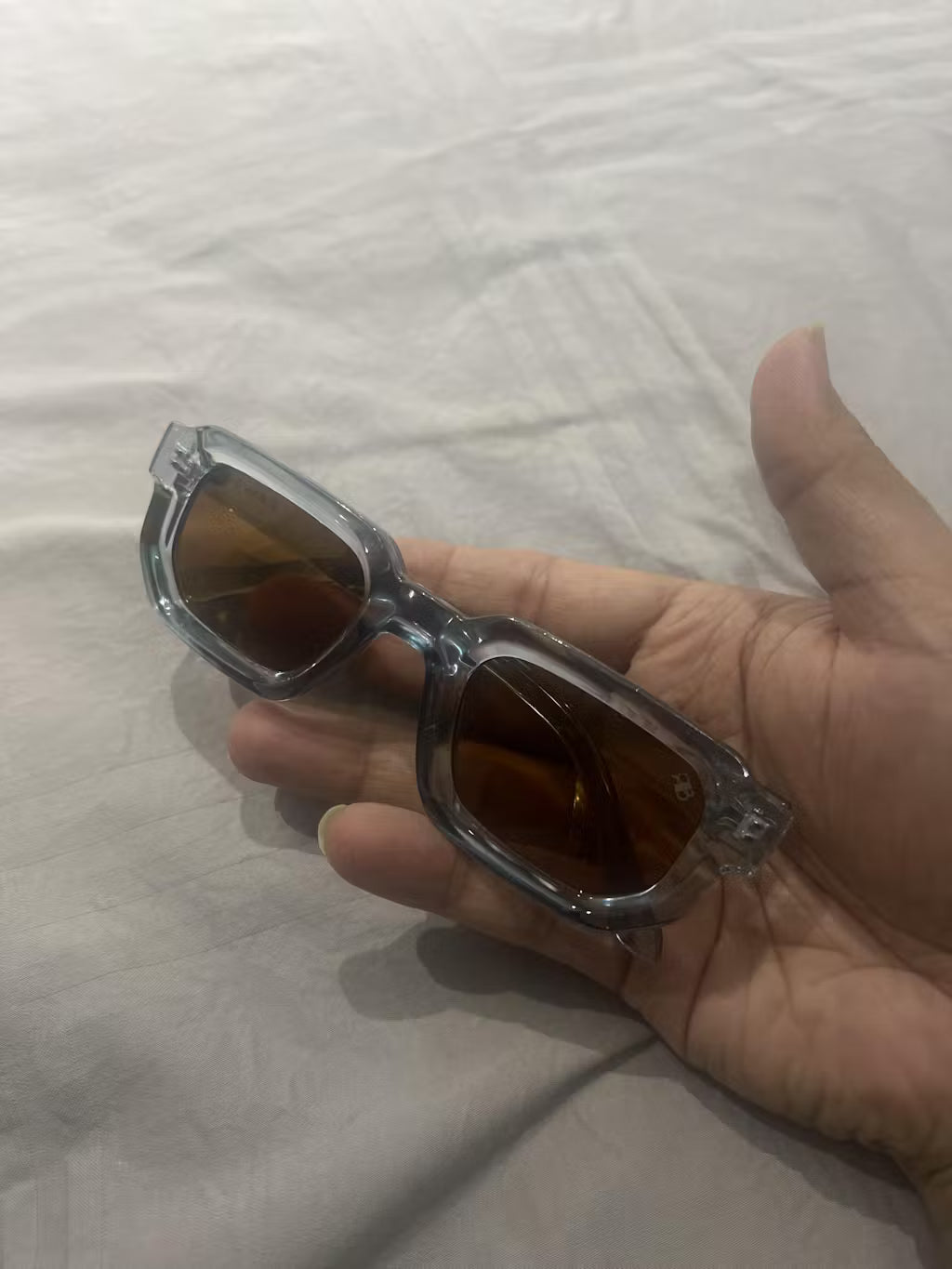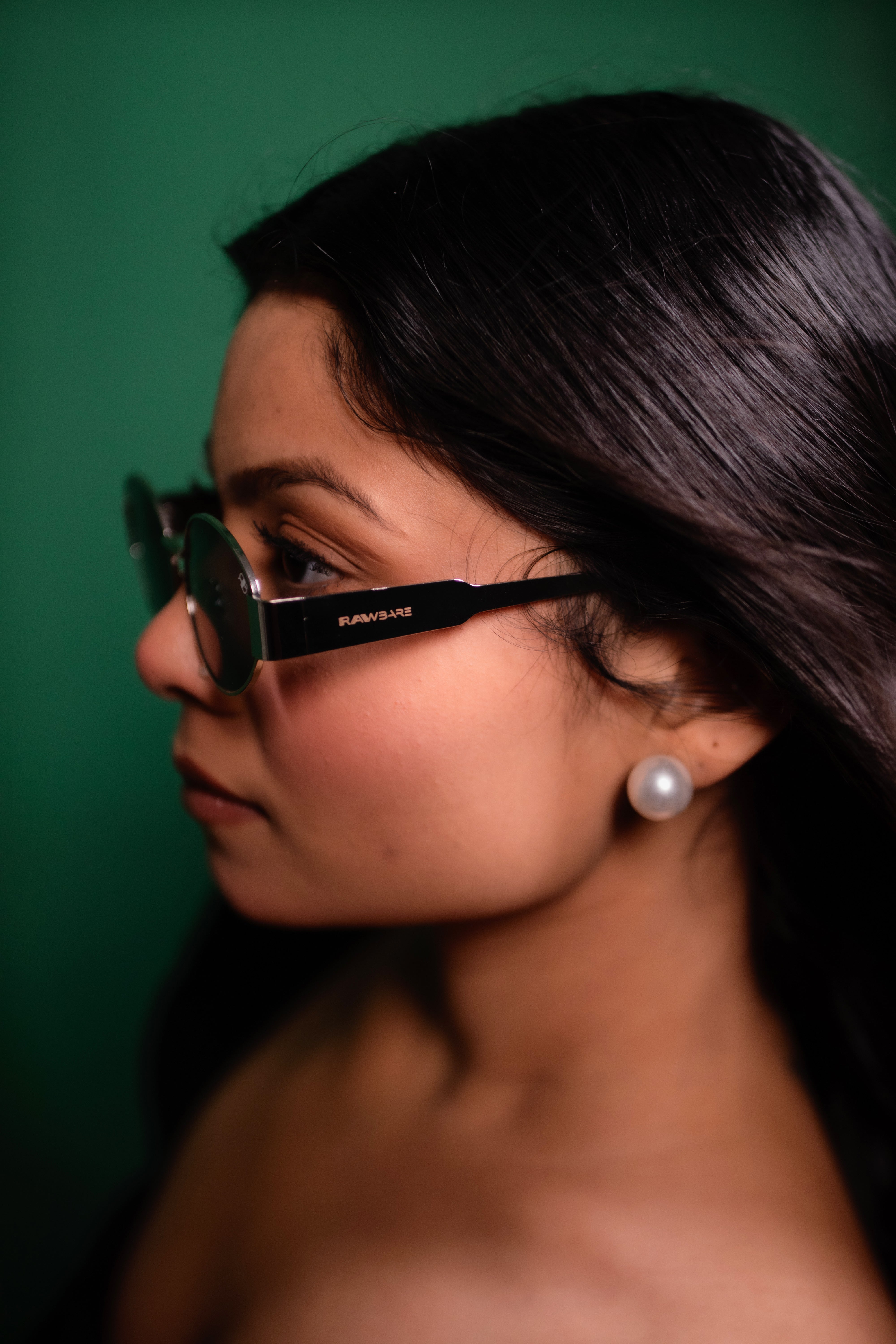
Sunglasses Frame Size Guide
The right frame size is the difference between sunglasses you reach for every day and a pair that lives in a drawer.
This guide shows you how to read the numbers on a frame, find your size in about two minutes, and choose a shape that suits your face, so you can buy with confidence.
How do you read sunglasses frame measurements?
Every frame carries three numbers, usually printed on the inside of one temple arm, written as lens width, bridge width and temple length, for example 52-18-140 (all in millimetres).
Those three numbers describe the frame's core dimensions. Two more, lens height and total frame width, decide how the pair actually sits on your face.
- ALens width The horizontal width of a single lens at its widest point. Usually 40 to 62 mm.
- BBridge width The gap between the two lenses that rests over your nose. Usually 14 to 24 mm.
- CTemple length The length of each arm, from the hinge to the tip behind your ear. Usually 135 to 150 mm.
- DLens height The vertical height of a lens. A taller lens gives more coverage from sun and glare.
- ETotal frame width The full width across the front of the frame. This is the single best number for judging whether a pair will fit your face.
How do you find your sunglasses size?
The fastest way is to read the numbers off a pair you already own and wear comfortably, then match them to the chart below.
If you do not have a reference pair, measure your face. Here are three reliable methods, easiest first.
Method 1
Copy a pair you already own
Pick a pair of glasses or sunglasses that fits well. Look on the inside of either temple arm for three small numbers, for example 52-18-140. Choose a new frame with similar numbers and you will get a similar fit.
Method 2
Measure your face width
Stand facing a mirror and measure straight across your face from one temple to the other, just above the ears, in millimetres. A standard card (the size of a debit card) is 85.6 mm wide, useful as a quick reference. Your face width is close to your ideal total frame width.
Method 3
Use the quick S / M / L guide
No ruler handy? Use the rule of thumb below. Most adults land in Medium. Choose Small for a narrower or smaller face and Large for a wider or larger one.
Sunglasses size chart (Small, Medium, Large)
Match your total frame width or lens width to the size below. Total frame width is the most reliable single measurement.
| Size | Lens width | Total frame width | Best for |
|---|---|---|---|
| Small | 47 to 50 mm | Up to 130 mm | Narrower or smaller faces, many women, and teens. A snug, neat look. |
| Medium | 51 to 54 mm | 131 to 138 mm | Most adult faces. The safe default if you are unsure where you sit. |
| Large | 55 to 60 mm | 139 mm and above | Wider or larger faces and broader foreheads. A bold, full-coverage fit. |
Bridge width and temple length vary less between sizes. Most frames sit around an 18 to 20 mm bridge and a 140 to 145 mm temple.
What are the best sunglasses for your face shape?
The simple rule: choose a frame that contrasts your face shape. Angular faces are softened by curves, and softer faces are defined by angles.
Oval
Balanced proportions, so almost anything works. Aviators, wayfarers and geometric frames all flatter. Keep the frame width in line with the widest part of your face.
Round
Angular frames add definition and length. Reach for square, rectangular or sharp geometric styles. Avoid small round frames that echo the face.
Square
Soft, curved frames balance a strong jaw. Round, oval and aviator shapes work beautifully. Skip boxy, heavily angled frames.
Heart
A wider forehead and narrow chin suit lighter, bottom-weighted frames. Aviators, round styles and rimless designs balance the proportions well.
Diamond
Narrow forehead and jaw with wide cheekbones. Cat-eye, oval and rimless frames, or styles with detail along the top, highlight your features.
Common questions about sunglasses sizing
What do the numbers on sunglasses mean?
They are three measurements in millimetres, printed inside one temple arm: lens width, bridge width and temple length, for example 52-18-140. They describe the size of the lenses, the nose gap and the arms.
How do I know what size sunglasses I need?
The quickest way is to read the numbers off a pair you already wear comfortably and match them to a new frame. If you have no reference pair, measure your face width from temple to temple and compare it to the size chart.
What is a medium size in sunglasses?
Medium frames have a lens width of roughly 51 to 54 mm and a total frame width of about 131 to 138 mm. They suit most adult faces and are the safe default if you are unsure.
How do I measure my face for sunglasses?
Face a mirror and measure straight across your face from one temple to the other, just above the ears, in millimetres. That figure is close to your ideal total frame width, which you can match to the size chart.
What size sunglasses are best for a small face?
Choose a Small frame with a lens width of about 47 to 50 mm and a total frame width up to 130 mm. This gives a neat, proportionate fit without the frame overwhelming your features.
Can I return sunglasses if the size does not fit?
Yes. Rawbare offers easy returns and exchanges, so if the fit is not right you can swap for another size or style. Every pair is also backed by our warranty.
Still unsure? We have you covered
- Easy returns and exchanges. If the size is not right, swap it for another with no fuss.
- Backed by warranty. Every Rawbare pair is built to last and covered if something goes wrong.
- Real people to help. Tell us the numbers from a pair you own and we will match you to the right frame.
Message us on WhatsApp or email connect@rawbare.com.
WhatsApp +91 93727 81408Real. Rare. Rawbare.