India-specific · Buying Guide
Best Sunglasses for Indian Summer
Indian summer is not like any other. UV index 10 to 11. Road glare. 45-degree heat. This guide covers exactly what to look for — and what Rawbare frames hold up to the actual conditions.
🕑 6 min read☀ Indian summer🇨🇳 India-specific
In this article
- Why Indian summer is a specific challenge
- UV400 — non-negotiable for Indian conditions
- Polarized lenses and road glare
- The right lens colour for Indian summer
- Frame materials in the heat
- Best Rawbare picks for Indian summer
Why Indian summer is a specific challenge
India’s UV intensity is among the highest in the world. The subcontinent sits close to the equator, with the sun nearly directly overhead from March through October in most cities. UV index readings of 10–11 are common in Mumbai, Delhi, Chennai, Hyderabad, and Bengaluru during peak months — classified as Extreme by the WHO.
Beyond UV: Indian summer roads create specific optical challenges. Hot tarmac reflects diffuse heat shimmer that blurs road markings. Wet surfaces after brief showers reflect intense horizontal glare. City driving involves constant switching between direct sun, shade, and bright reflective surfaces within seconds.
UV exposure in Indian summer
At UV index 10–11, the WHO notes that unprotected eye exposure can begin causing cumulative damage in under 15 minutes. For anyone outdoors in Indian summer — commuting, riding, sports, market visits — UV400 protection is the minimum requirement.
UV400 — non-negotiable for Indian conditions

UV400 certification means the lens blocks all ultraviolet radiation up to 400 nanometres — covering 100% of both UVA and UVB. It is not a premium feature. It is the minimum standard. Without it, dark-tinted lenses are actively dangerous: they cause your pupil to dilate while UV radiation passes through unfiltered.
All Rawbare frames ship with UV400 as standard. No exceptions.
Polarized lenses and road glare

Polarized lenses do something UV400 does not: they block horizontal glare from reflective surfaces. Road surfaces, other vehicles, puddles, and wet tarmac all reflect intense horizontal light that creates the squint-and-flinch response. Polarized lenses eliminate this at the source.
For Indian summer specifically, where road glare from dry tarmac creates heat shimmer and wet roads after a brief shower reflect dramatically, polarized is the upgrade that makes a visible difference within the first five minutes of wearing.
Test it yourself
Hold any sunglasses up to your phone screen and rotate them 90 degrees. If the screen darkens or goes black, the lenses are genuinely polarized. If brightness stays the same, they are standard tinted.
The right lens colour for Indian summer

Grey — most versatile
Reduces brightness without shifting colours. Best for city use, driving, and general outdoor activity in Indian summer.
Brown / Amber — contrast
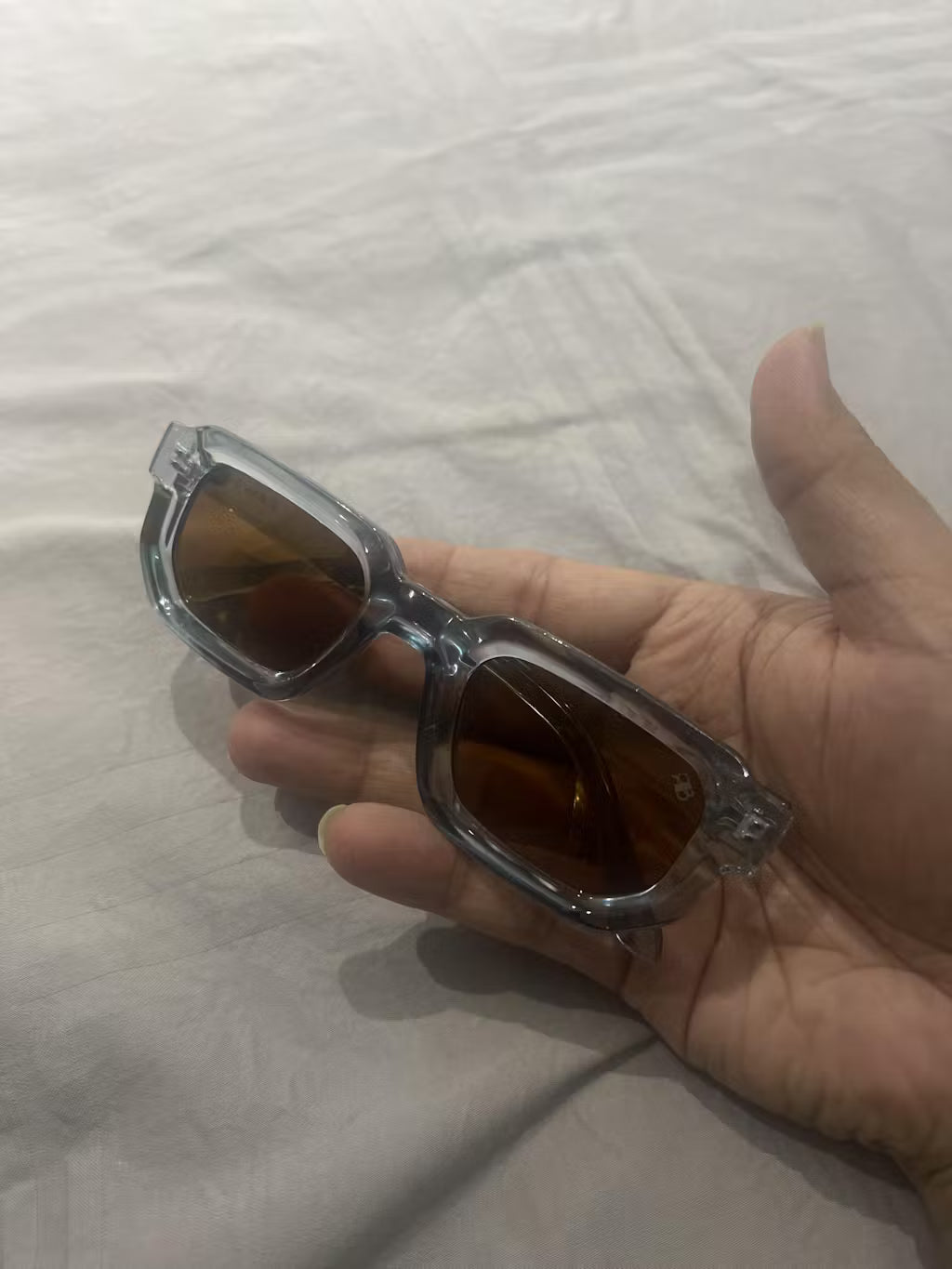
Enhances contrast and depth. Good for driving on Indian roads where reading the road surface matters. Slightly warms the visual field.
Photochromic — adaptive
Automatically darkens in bright sun and lightens in shade. Ideal for commuters moving between sun and shade repeatedly.
Avoid very dark static tints
Dark non-polarized tints reduce visibility in shade without offering UV benefit. In variable Indian light, they create more problems than they solve.
Frame materials in the heat
Indian summer heat is extreme for frame materials. Dashboard temperatures in parked cars regularly exceed 70–80°C. Two material warnings:
Do not leave in a parked car
Acetate frames soften above approximately 60°C. Dashboard temperatures in Indian summer regularly exceed this. Always store in a case when leaving a vehicle. TR90 and metal frames handle heat significantly better, but lens coatings on all frames can degrade at extreme temperatures.
Best Rawbare picks for Indian summer

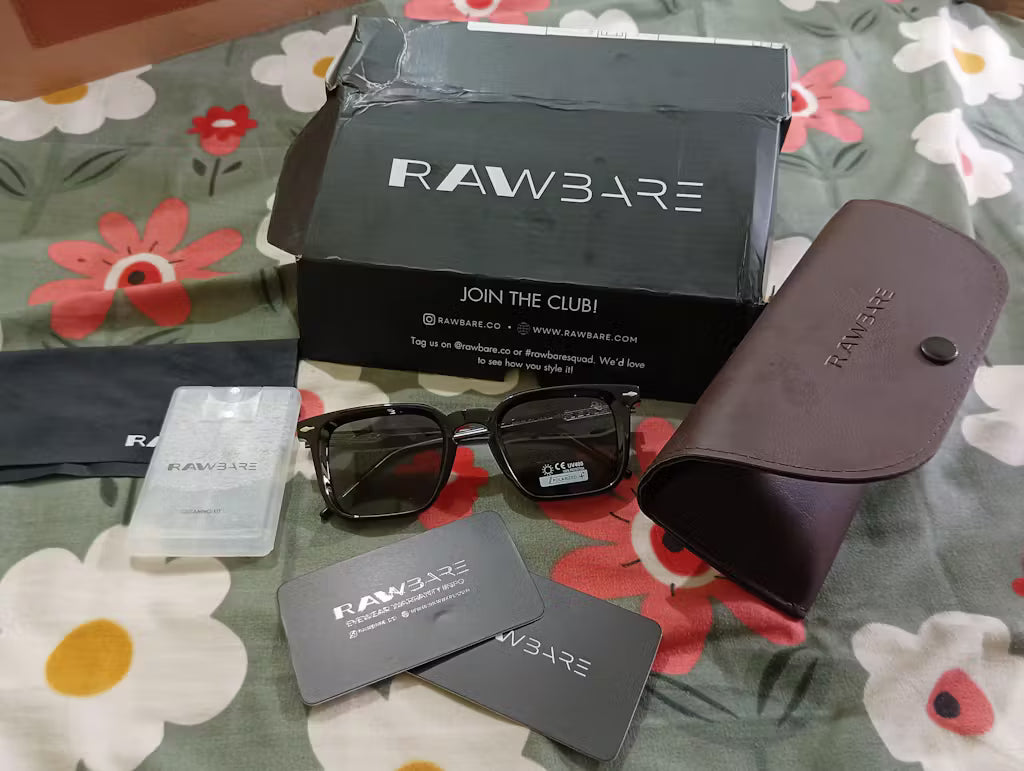
Clean rectangle frame with polarized UV400 lenses. Works for commuting, outdoor meetings, and weekend use. Lightweight, classic design. The grey polarized lens is the ideal all-day summer lens.
PolarizedUV400Rectangle
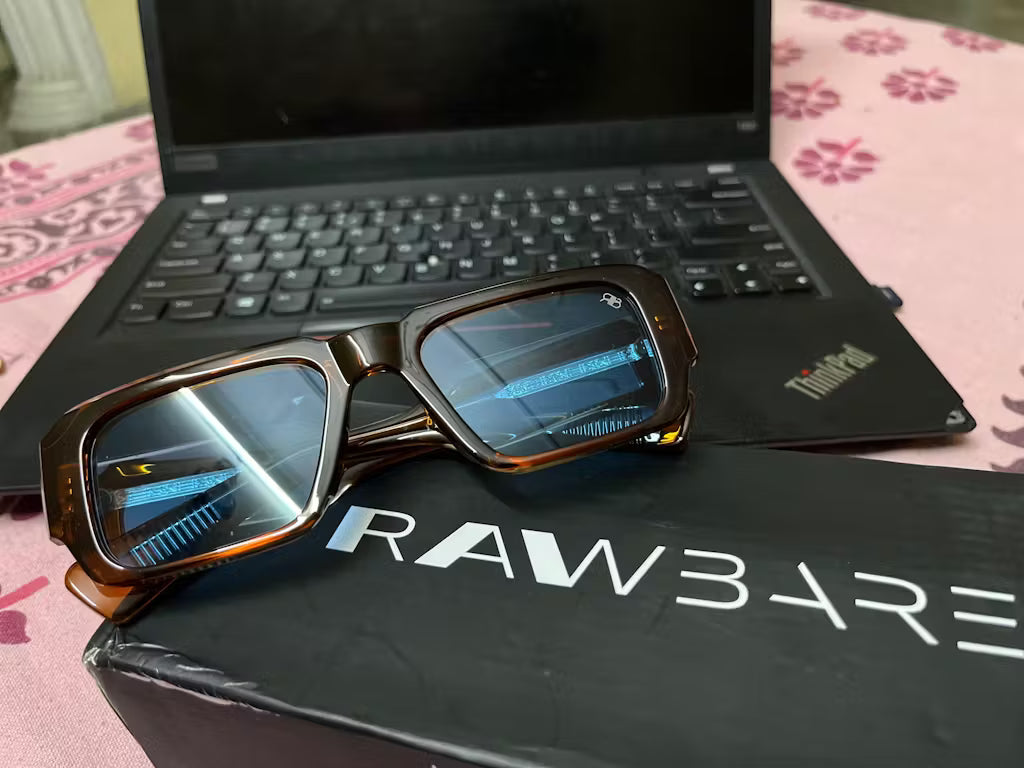
Polarized wraparound TR90 frame. Full peripheral coverage for sports, riding, and high-UV outdoor activity. The wraparound design blocks UV from the sides — up to 50% of UV exposure can enter from outside the lens zone of standard frames.
PolarizedUV400WraparoundTR90
Photochromic wraparound frame for commuters who move between harsh sun and shade repeatedly. Adapts automatically. No need to swap glasses.
PhotochromicUV400Wraparound
Key takeaways
✓ Indian UV index reaches 10–11 for most of the year — UV400 is mandatory
✓ Polarized lenses eliminate road glare specific to Indian conditions
✓ Grey lenses are most versatile; brown improves contrast for driving
✓ Never leave frames in a parked car — dashboard heat warps acetate
✓ Wraparound frames block side UV — up to 50% of exposure comes from the sides
Q1 Do I need polarized sunglasses for Indian summer or is UV400 enough?
UV400 is the non-negotiable baseline. Polarization is the upgrade for India specifically, where road glare from hot tarmac and wet surfaces is constant. For daily outdoor use in Indian summer, polarized UV400 is the recommended combination.
Q2 What lens colour is best for Indian summer?
Grey lenses are the most versatile — they reduce brightness without distorting colours. Brown and amber lenses enhance contrast and depth, which is useful for driving or reading road surfaces in variable Indian light.
Q3 Are darker lenses better protection in summer?
No. Lens darkness and UV protection are completely unrelated. A dark lens with no UV coating is more dangerous than no sunglasses, as it causes pupils to dilate while admitting full UV radiation.
Q4 How long can I be outdoors in Indian summer without eye protection?
At UV index 10 to 11, unprotected eye exposure can begin causing cumulative damage in under 15 minutes according to WHO guidelines. For anyone spending significant time outdoors in Indian summer, consistent UV400 protection is essential.
Q5 Can sunglasses melt or warp in Indian summer heat?
Yes — if left in direct heat like a car dashboard. Dashboard temperatures in Indian summer regularly reach 70 to 80 degrees Celsius. Acetate frames are most vulnerable to warping. Always store in a case. TR90 frames handle heat significantly better and are most vulnerable.