
The Complete History of Sunglasses: From Inuit Snow Goggles to UV400
Eyewear History
The Complete History of Sunglasses: From Inuit Snow Goggles to UV400
Two thousand years of eyewear history compressed into one article — from carved walrus bone in the Arctic to polarized PVA film and UV400 certification.
In this article
- Inuit snow goggles (~1200 AD)
- China's smoky quartz lenses (12th century)
- 18th-century tinted eyeglasses
- Sam Foster and mass production (1929)
- Edwin Land and polarized lenses (1936)
- Ray-Ban Aviators and World War II
- Hollywood and the style era
- The UV400 standard
- Where Rawbare fits in this story
- Frequently asked questions
Inuit snow goggles (~1200 AD)

The oldest surviving eye protection devices come from the Arctic. Inuit people across Alaska, Canada, and Greenland carved narrow-slit eye coverings from walrus ivory, bone, driftwood, or caribou antler. The slits were 1 to 3 mm wide — narrow enough to dramatically reduce the reflective light from snow and ice that causes snow blindness.
Some designs were blackened on the outer surface with soot, which absorbed additional reflected light. Modern photometric tests have confirmed these devices were genuinely effective. The principle is identical to what modern lens tints do: reduce the aperture of incoming light to protect the retina.
China's smoky quartz lenses (12th century)

The first tinted-lens eyewear appears in the Song Dynasty court of 12th-century China. Judges wore flat planes of smoky quartz — a naturally semi-transparent mineral — held in rigid frames, to conceal facial expressions during proceedings. The lenses were not corrective and offered no UV protection, but they represent the first recorded use of a tinted lens held in a frame, worn on the face.
18th-century tinted eyeglasses

English optician James Ayscough began experimenting with blue and green tinted spectacle lenses in the 1750s. His primary goal was improving colour perception for vision conditions, not sun protection. His work produced the hinged temple arm frame architecture that all modern eyewear still uses.
By the early 1800s, tinted glasses had entered European medical practice. Patients being treated for syphilis with silver nitrate developed severe light sensitivity, and tinted spectacles were prescribed to manage it — gradually expanding acceptance of coloured lenses as functional products.
Sam Foster and mass production (1929)

Everything changed on the Atlantic City boardwalk in 1929. Sam Foster began selling celluloid-framed sunglasses at ten cents a pair through the Woolworth chain. They sold immediately and in massive volumes. For the first time in history, sunglasses were a consumer product anyone could buy over the counter.
Edwin Land and polarized lenses (1936)

Edwin Land, a 19-year-old Harvard dropout, had been conducting private optics experiments since 1928. By stretching a polymer film to align its molecules in a single direction, he created the first practical synthetic polarizing filter — a material that blocks specifically the horizontal light waves responsible for reflective glare while allowing all other light through.
In 1936, he applied this technology to sunglass lenses and founded the Polaroid Corporation. The same PVA-stretching principle underpins every polarized lens manufactured today. Land went on to hold 535 patents and invented the instant camera — but his polarizing film remains his most enduringly used invention.
Ray-Ban Aviators and World War II

Bausch and Lomb designed the Aviator frame in 1936 for US military pilots operating at altitude, where glare is intense and unfiltered. When General Douglas MacArthur was repeatedly photographed in Ray-Ban Aviators throughout his Pacific campaign, the style acquired an association with command, composure under pressure, and authority that no marketing campaign could have manufactured.
The Aviator became the template for the idea that eyewear communicates something about who you are. It was the first sunglass design where the cultural meaning of wearing a specific frame became as significant as its function.
Hollywood and the style era

Post-war Hollywood accelerated the cultural role of sunglasses. Marlon Brando in The Wild One. Audrey Hepburn in Breakfast at Tiffany's. Peter Fonda in Easy Rider. Each generation of cultural icons imprinted specific frame shapes with specific emotional meanings.
The UV400 standard

Through most of the 20th century, consumers assumed dark lenses provided UV protection. Research in the 1970s and 1980s dismantled this decisively: tint darkness and UV blocking are entirely unrelated properties. The UV400 standard emerged from this research as a verifiable specification — lenses that block all ultraviolet light up to 400 nanometres, covering both UVA and UVB completely.
Today, UV400 is the minimum standard recommended by the American Academy of Ophthalmology and the WHO. Any sunglass claiming UV protection without specifying UV400 or 100% UV protection may offer partial or no protection.
Where Rawbare fits in this story
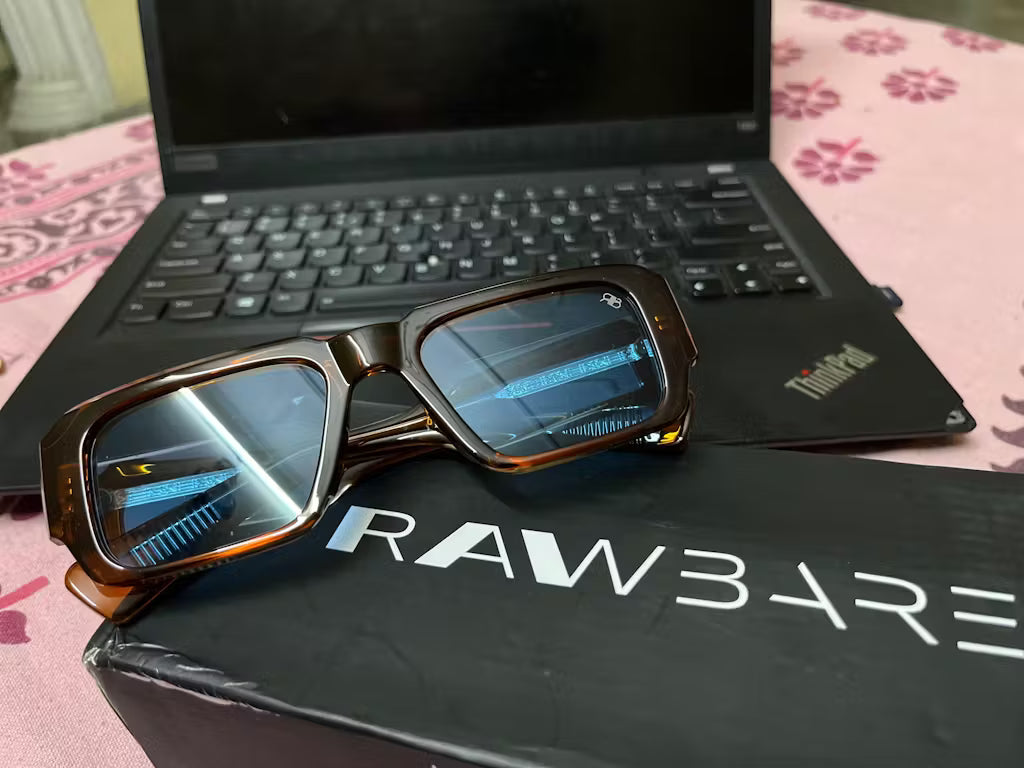
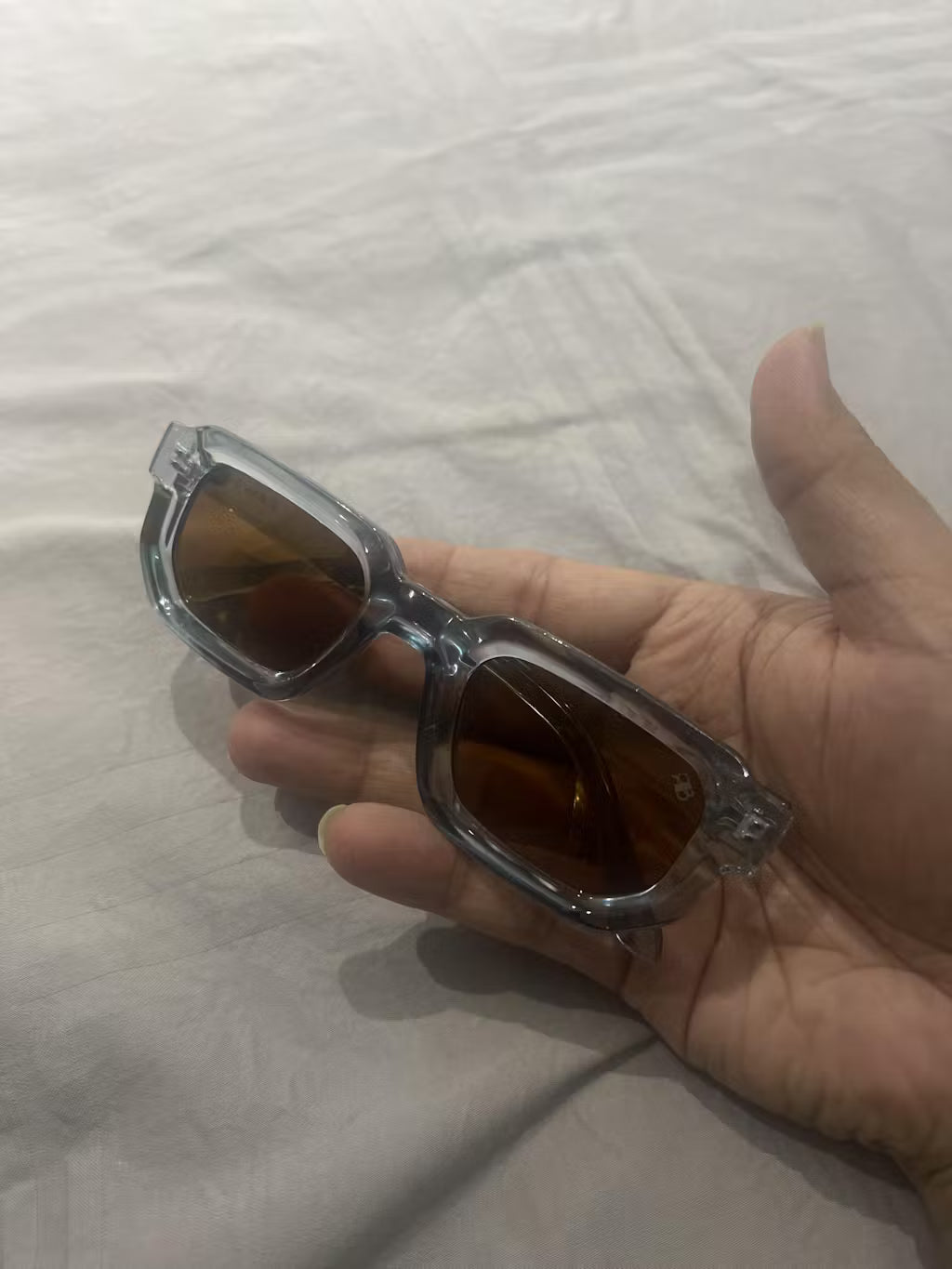
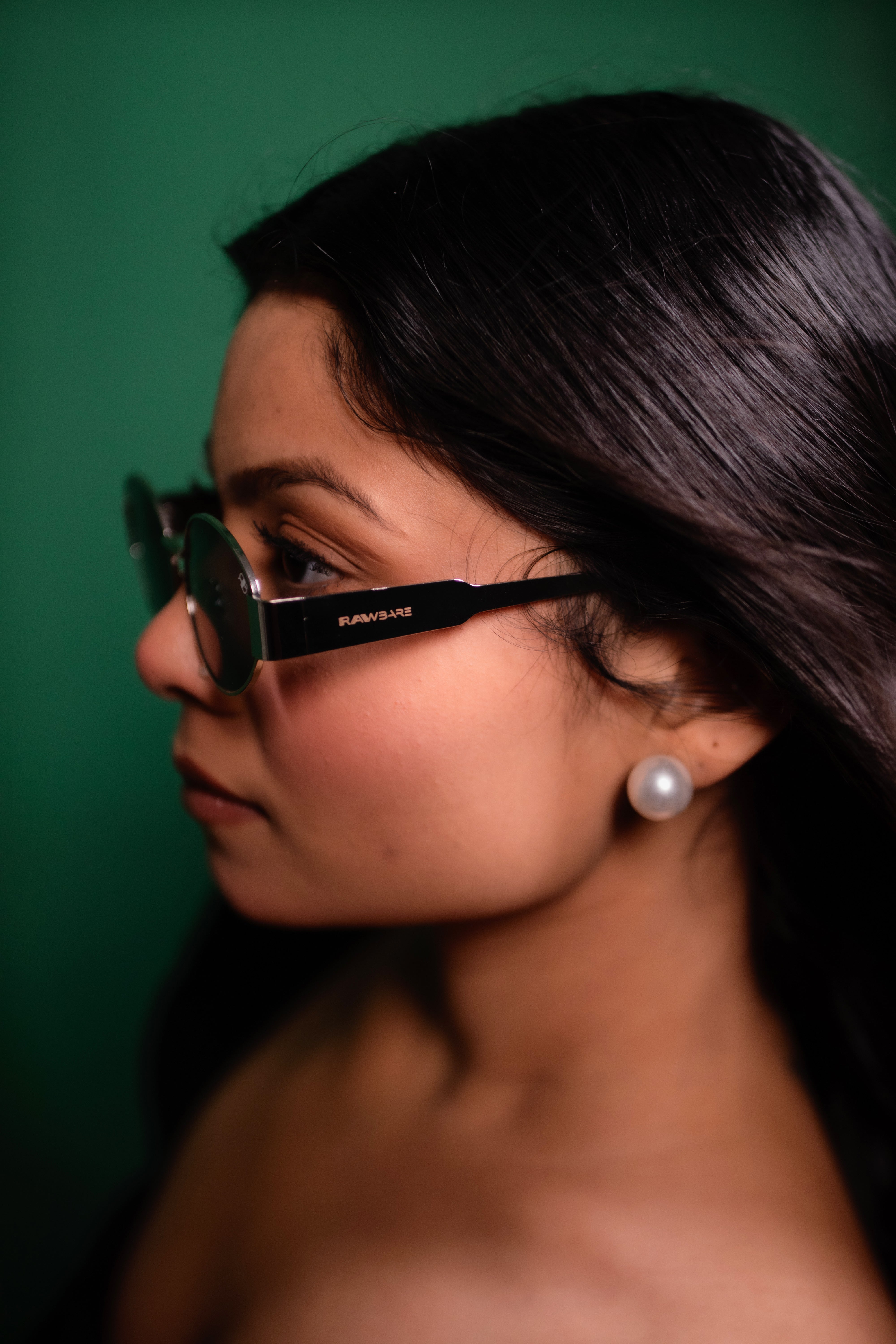
Rawbare was founded in 2022 in India with a specific belief: that quality eyewear — UV400 protection, genuine polarized lenses, lightweight durable frames — should not require the price premium that global brands charge for the same specifications.
The history of sunglasses is a history of protection becoming a fashion statement. Rawbare's position is that it should be both. Every frame in the collection carries UV400 as standard — not an upgrade, not a premium tier. The standard.


Frequently asked questions
Key takeaways