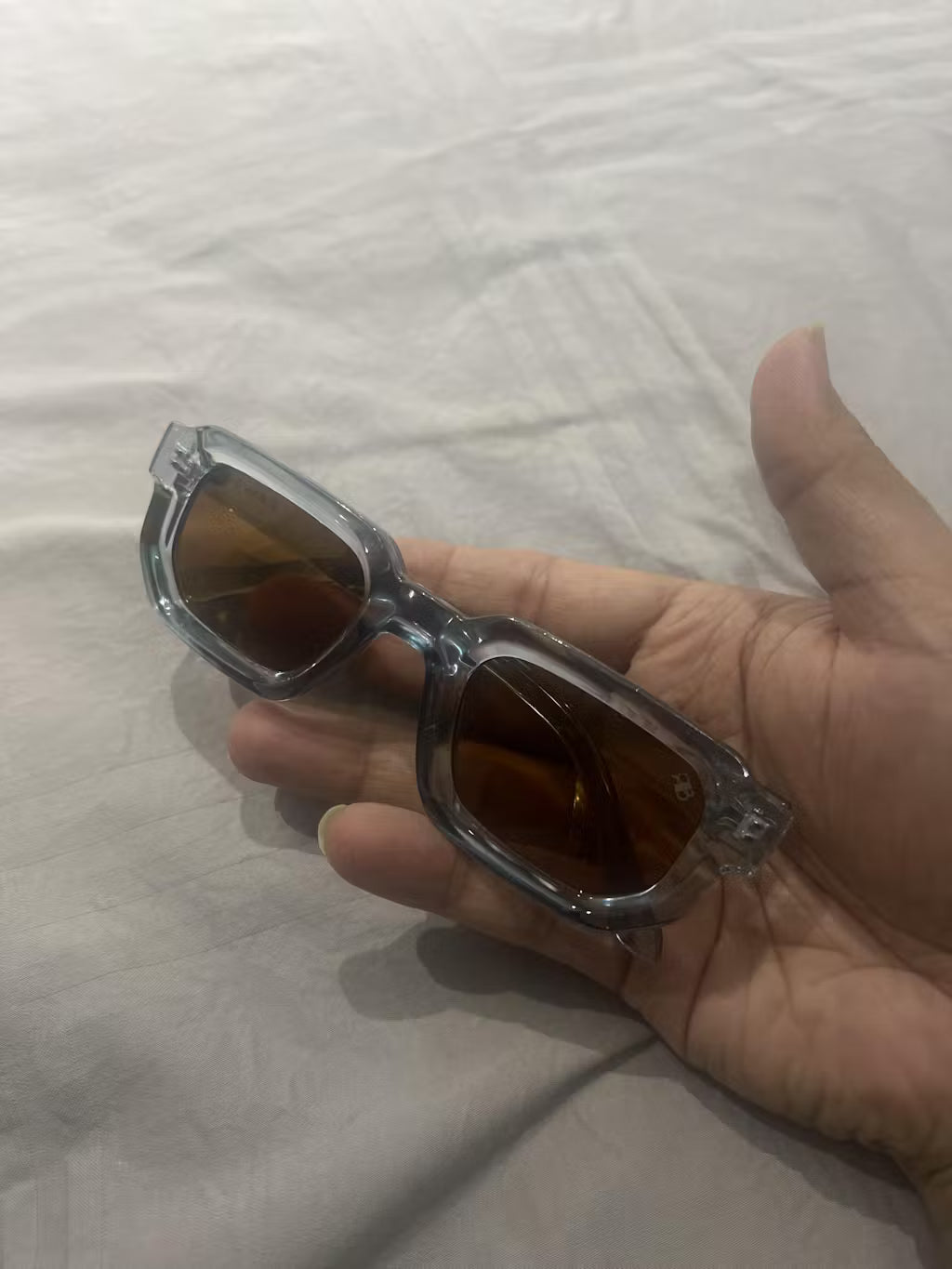

How to Read the Numbers on Your Sunglasses (52-18-140 Explained)
Fit and Sizing
How to Read the Numbers on Your Sunglasses (52-18-140 Explained)
Those tiny numbers printed inside the arm of your sunglasses are a size code in millimetres. Once you can read them, finding a pair that fits gets a lot easier.
In this article
- What are the numbers printed on sunglasses?
- What does each number mean?
- Where do I find these numbers?
- How do I use them to get the right fit?
- Do I need to match the numbers exactly?
What are the numbers printed on sunglasses?

The numbers printed inside your sunglasses are a measurement code, almost always three numbers in millimetres: lens width, bridge width and temple length. A typical set reads something like 52-18-140, sometimes written with a small square between the first two, as in 52 box 18, then 140. They describe the size of the frame, nothing more.
Knowing them lets you compare any two pairs on a like-for-like basis, even when you cannot try them on.
What does each number mean?

Read left to right, the three numbers are always in the same order.
| Number | What it is | Typical range |
|---|---|---|
| First | Lens width, across one lens | 48 to 62 mm |
| Second | Bridge width, the gap over your nose | 14 to 24 mm |
| Third | Temple length, the arm to your ear | 120 to 150 mm |
Some frames add a fourth number for lens height. The small square symbol you sometimes see, written as box, simply separates the lens width from the bridge width. It is called the boxing symbol and carries no measurement of its own.
Where do I find these numbers?

Look on the inside of one temple arm, the part that rests along the side of your head. On some frames they sit on the inside of the bridge instead. Alongside the size you will often see a model name and a colour code, so the size is usually the run of three numbers separated by dashes or a square.
How do I use them to get the right fit?

The most reliable trick is to read the numbers off a pair you already own and like, then look for similar figures. A larger lens width means a wider frame across your face. The bridge width controls how the frame sits on your nose, which is why two pairs with the same lens width can still feel different. The temple length decides whether the arms reach your ears comfortably without pinching.
Do I need to match the numbers exactly?

No. A millimetre or two either way is rarely noticeable. Aim to get close rather than perfect, and treat the overall frame width across your face as the figure that matters most for the look and feel. The numbers are a guide to narrow the field, not a pass or fail test.
When you are ready to compare frames by size, browse the Rawbare sunglasses range.
Frequently asked questions
Key takeaways