Eye Protection · Lens Guide
Protecting Your Eyes: The Role of Polarized Sunglasses

Polarized sunglasses are not just a premium upgrade — they are a fundamentally different type of lens. This guide explains exactly what they do, why it matters for daily life in India, and how to verify you are actually getting what you pay for.
🕑 6 min read🛡 Eye protection👔 Lens guide
In this article
- How polarized lenses work
- Polarized vs UV — they are different
- Who needs polarized lenses
- How to test if lenses are genuinely polarized
- The trade-offs
How polarized lenses work

Light normally travels in all directions — what physicists call unpolarized light. When it reflects off a horizontal surface like a road, wet tarmac, or water, the reflected light becomes predominantly horizontal. This concentrated horizontal light is what causes the intense glare that makes you squint.
A polarized lens contains a chemical filter oriented vertically. It blocks horizontal light waves while letting vertical light through. The result: glare is eliminated, visual clarity improves, and colours appear more saturated and true.
The physics in one line
Polarized lenses act like a horizontal blind for light — they block the flat, glaring light that bounces off surfaces while letting all other light through.
Polarized vs UV protection — they are different
| Feature |
What it does |
What it blocks |
| UV400 |
Blocks invisible ultraviolet radiation |
UVA and UVB rays (0–400nm) |
| Polarized |
Eliminates reflective surface glare |
Horizontal visible light waves |
A lens can be polarized without being UV400, and UV400 without being polarized. For complete protection, you want both. All Rawbare polarized frames include UV400 as standard.
Who needs polarized lenses

Road surfaces, car bonnets, and wet tarmac are among the most aggressive sources of horizontal glare. Polarized lenses eliminate this glare, reducing eye fatigue on long drives and improving visibility in wet conditions.
Cricket, cycling, hiking, water sports — any activity near reflective surfaces benefits from polarization. The contrast enhancement also makes it easier to track moving objects.
Indian roads with their mixed surfaces, frequent puddles, and high traffic density create constant horizontal glare. Polarized lenses make urban commuting noticeably more comfortable.
If you frequently experience eye strain, headaches, or squinting in bright conditions, polarized lenses address the root cause — horizontal glare — rather than just reducing overall brightness.
How to test if lenses are genuinely polarized
The phone screen test
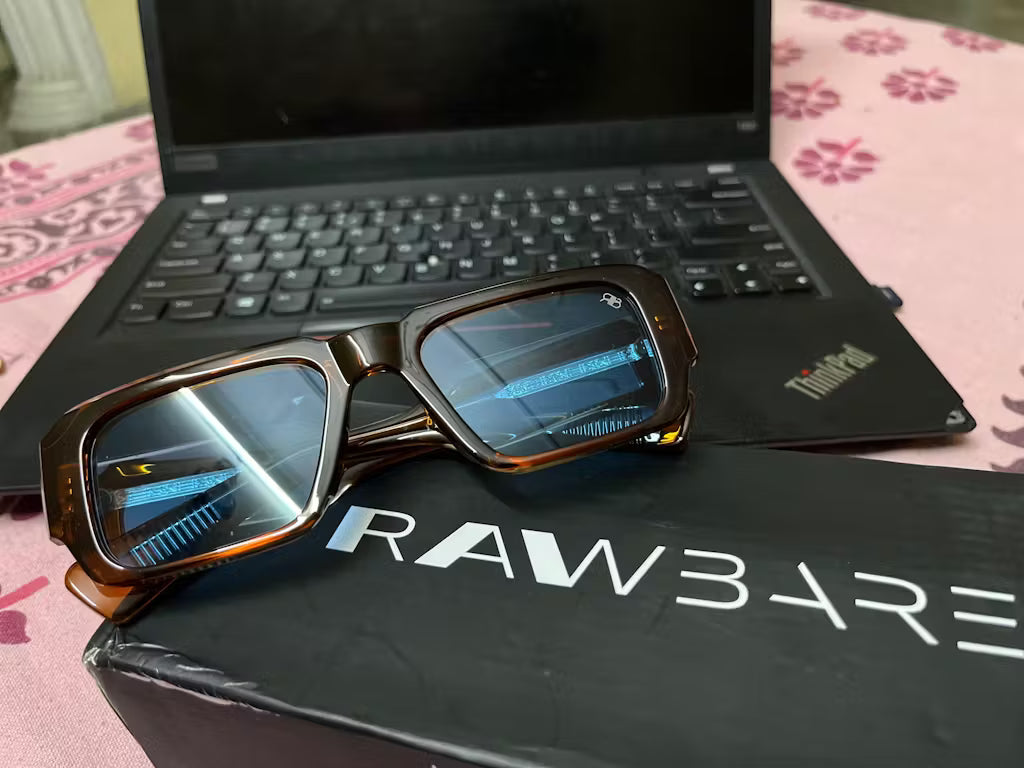
Hold the sunglasses in front of your phone or laptop screen. Slowly rotate the lenses 90 degrees. If the screen significantly darkens or goes black, the lenses are genuinely polarized. If brightness stays the same, the lenses are just tinted.
The trade-offs

Polarized lenses are excellent for almost everything — with two exceptions worth knowing:
LCD screens emit polarized light. Viewed through polarized lenses at certain angles, screens can appear dim or show colour bands. This is normal physics — it does not mean the lenses are defective. Tilting your head slightly usually resolves it.
Polarized lenses reduce total light transmission, which is useful in bright conditions but inappropriate at night. Always switch to clear or lightly tinted lenses after dark.
Browse Rawbare polarized UV400 sunglasses — tested, genuine polarization across all polarized frames.
Key takeaways
✓ Polarized lenses block horizontal light waves that cause glare
✓ Polarization and UV400 are separate features — verify both
✓ Use the phone screen rotation test to verify genuine polarization
✓ Polarized lenses improve driving, sport, and outdoor visibility
✓ Avoid polarized lenses for night driving
Q1 What are polarized sunglasses and how do they work?
Polarized lenses contain a chemical filter that blocks horizontal light waves — the ones that cause glare off flat surfaces like roads, water, and car bonnets. Only vertical light passes through, giving sharper and more comfortable vision in bright conditions.
Q2 Are polarized lenses the same as UV protection?
No — they are completely separate features. Polarization reduces visible glare. UV400 blocks invisible ultraviolet radiation. A lens can be polarized without blocking UV rays. Always verify both on any pair you buy.
Q3 How do I test if sunglasses are genuinely polarized?
Look at your phone or laptop screen through the lenses and rotate them 90 degrees. If the screen darkens significantly or goes black, the lenses are genuinely polarized. If nothing changes, they are just tinted.
Q4 Are polarized sunglasses good for driving in India?
Yes — particularly for Indian roads. Wet tarmac, car bonnets, and puddles reflect intense horizontal glare that non-polarized lenses cannot address. Polarized lenses eliminate this glare, improving visibility and reducing eye fatigue in bright conditions.
Q5 Do polarized sunglasses affect screen visibility?
Yes, slightly. LCD screens can appear dim or have coloured bands when viewed at certain angles through polarized lenses. This is normal physics and does not indicate defective lenses.