Style · Culture · Fashion
Sunglasses as Fashion Statements: How Eyewear Became the Ultimate Style Accessory
Sunglasses started as eye protection. Somewhere along the way — in Hollywood studios, on military pilots, through rock concerts and magazine covers — they became the most expressive accessory a person can wear.
🕑 6 min read👚 Style💓 Fashion
In this article
- The utilitarian origin
- Hollywood and the mystique of the hidden eye
- Military cool and James Dean
- The decade-by-decade style evolution
- What your frame choice says about you
The utilitarian origin
The first mass-market sunglasses were sold for ten cents a pair on the Atlantic City boardwalk in 1929 by Sam Foster. No fashion claims. No brand positioning. Just cheap, functional, accessible eye protection for anyone standing in the summer sun. In that first year alone, millions sold.
For the first decade, sunglasses were tools. Film crews wore them on outdoor shoots. Pilots wore them in open cockpits. Tourists wore them at the beach. The idea that they could be expressive — that the frame you chose said something about who you were — had not yet arrived.
Hollywood and the mystique of the hidden eye

Hollywood changed everything. Studios discovered that dark glasses on talent created a specific effect — the eyes are the most expressive part of the human face, and hiding them creates immediate intrigue. Greta Garbo wore them to avoid recognition. Early studios used them as props for mystery and glamour.
Audrey Hepburn’s oversized dark frames in Breakfast at Tiffany’s in 1961 did something more specific: they turned sunglasses into a statement of sophisticated nonchalance. The look said I am aware of being watched, and I choose not to acknowledge it. It became one of the most copied aesthetic moves in fashion history.
The Foster Grant moment
Foster Grant’s 1960s campaign “Who’s that behind those Foster Grants?” was ranked among the top 100 advertising campaigns of the 20th century by Ad Age. It hid celebrities behind glasses and made anonymity aspirational. From that point on, sunglasses were permanently associated with status and mystique.
Military cool and James Dean
The Aviator frame was designed in 1936 to protect US military pilots from altitude glare. By the time General MacArthur was photographed striding through Pacific warzones in his Ray-Ban Aviators during World War II, the style had acquired something that no marketing team could manufacture: the association with command, cool under pressure, and effortless authority.
James Dean arrived in the mid-1950s wearing something entirely different — slim, slightly opaque, with an unapologetic rebelliousness that the clean aviator line could not carry. The Wayfarer, launched by Ray-Ban in 1952, became the frame for the generation that was not interested in authority’s definitions of cool.
The decade-by-decade style evolution

The rebel and the icon
Marlon Brando in The Wild One. James Dean in East of Eden. Sunglasses become shorthand for defiance. Cat-eye frames arrive for women as the first explicitly fashion-forward sunglass shape.
Oversized, camp and the fashion press
Oversized frames explode. Twiggy, Sophia Loren, Andy Warhol’s round tinted glasses. Vogue begins covering sunglasses as fashion objects rather than accessories. The price of ‘designer’ eyewear separates from mass market.
Glamour and graduated tints
Gradient lenses, metal frames, the beginning of the designer label era in eyewear. Gucci, Carrera, and Cazal establish that the right brand on a frame signals wealth and taste independently of the object itself.
Power dressing and excess
Wayfarers return in force via Tom Cruise in Risky Business. Top Gun turns Aviators into a global phenomenon again. The decade rewards bold, visible, logo-forward choices.
Minimalism and the sports crossover
Wraparound sports frames enter mainstream wear. Minimalist thin-frame styles arrive. Kurt Cobain’s small oval frames signal that seriousness about style could look deliberately unstyled.
Identity, not category
The internet fragments the sunglass market into a thousand micro-aesthetics. No single look dominates. Vintage revivals coexist with technical performance frames and quiet luxury. The question is no longer which trend to follow but which identity to project.
What your frame choice says about you

The reason sunglasses became the ultimate fashion statement is structural. They sit at the focal point of the face. They are the first thing people see. And unlike most accessories, they affect how you see the world — literally. No other accessory carries that dual function.
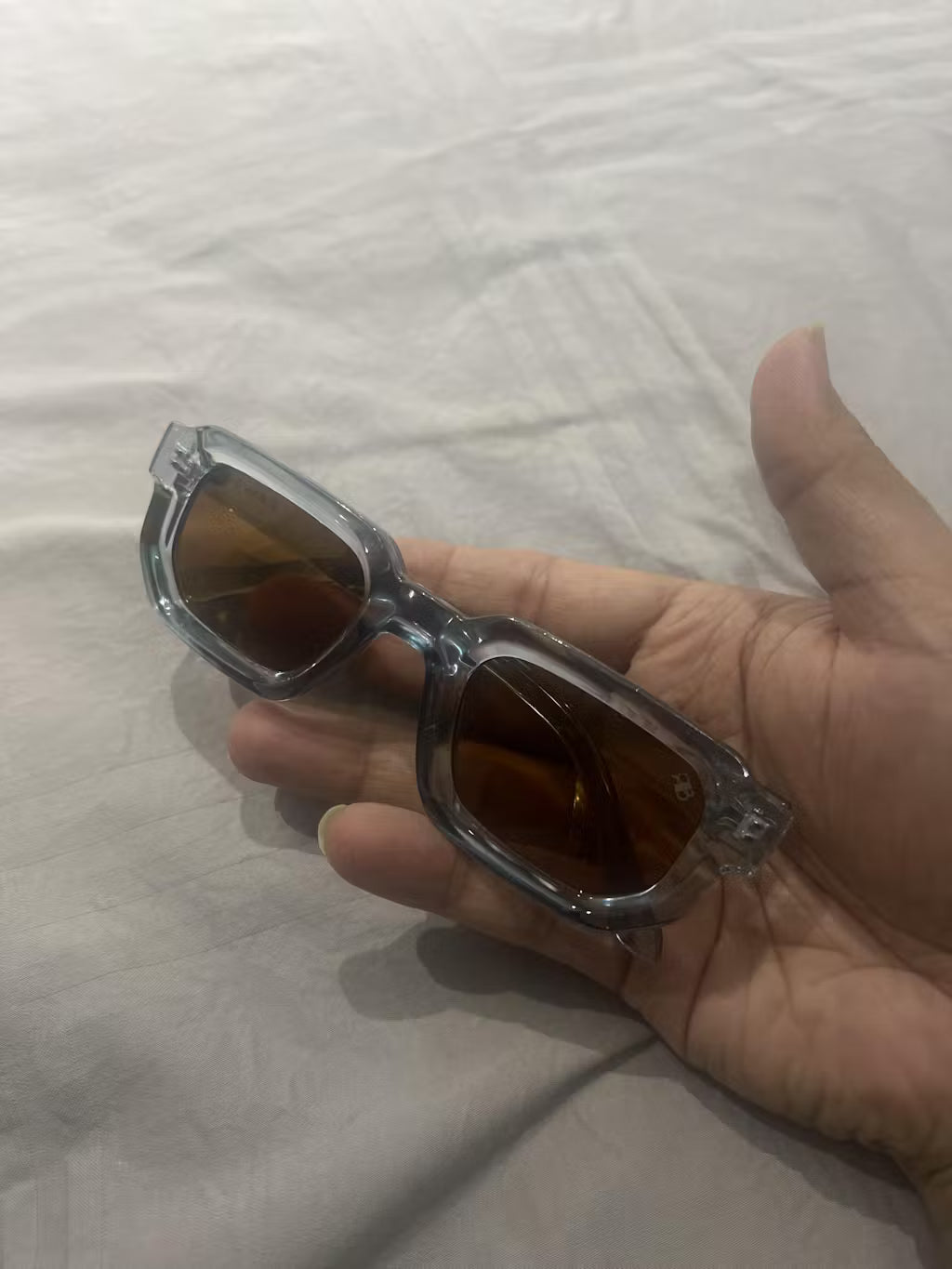
The choice you make is immediately legible. Minimal metal says something different from bold acetate. Mirrored lenses signal something different from classic brown polarized. The frame is not decoration on top of the face — it is part of how you choose to appear in the world.
The Rawbare approach
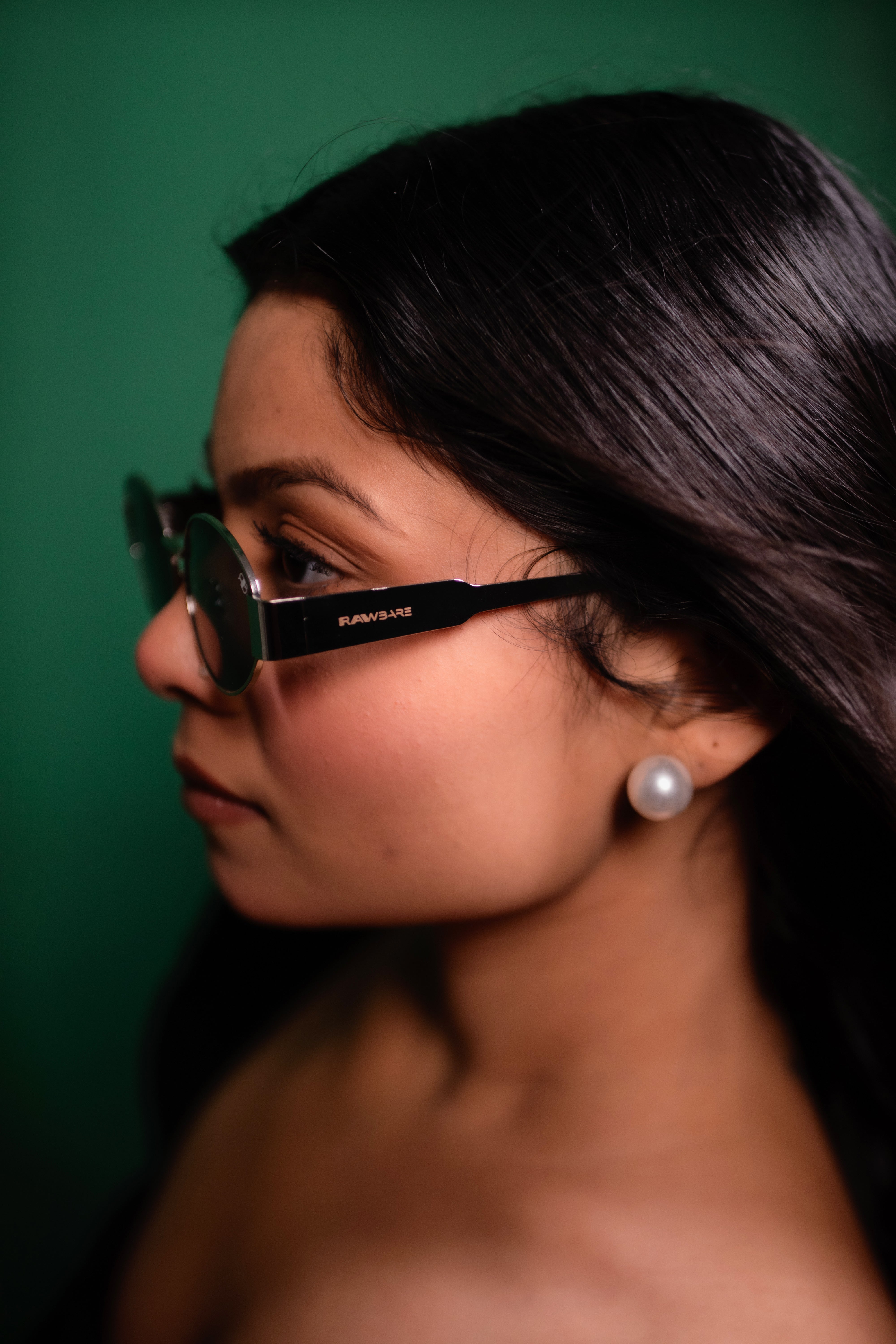
Rawbare does not make one aesthetic. The range spans quiet minimalism to statement-forward bold frames because the people who wear them are not one type. The only constant is that every frame is built properly: UV400, proper construction, and lenses that actually do what lenses are supposed to do.
Key takeaways
✓ Sunglasses became fashion accessories in the 1920s–30s through Hollywood’s use of dark glasses to create mystique
✓ The Aviator acquired military authority through WWII; the Wayfarer acquired rebellious cool through 1950s cinema
✓ Each decade has assigned different cultural meaning to specific frame shapes and lens treatments
✓ Sunglasses are the most expressive accessory because they sit at the focal point of the face
✓ Contemporary sunglass choice is about identity projection rather than trend following
Q1 When did sunglasses become a fashion accessory?
Sunglasses became a fashion accessory in the 1920s when Hollywood actors began wearing dark glasses. By the 1950s, Marlon Brando and Audrey Hepburn had made them cultural icons.
Q2 What sunglasses frame is considered timeless?
Aviators and wayfarers are considered the most timeless frames. The aviator was developed in 1936 and the wayfarer in 1952 — both remain among the best-selling styles globally today.
Q3 How do sunglasses communicate personal style?
Sunglasses are front and center on your face. The shape, size, and colour of your frames communicate aesthetic sensibility immediately — from understated minimalism to bold maximalism.
Q4 What sunglasses frame suits a strong personality?
Bold geometric frames, oversized silhouettes, and coloured or mirrored lenses are the frames that signal confidence. They are not for blending in.
Q5 Can sunglasses elevate any outfit?
Yes — sunglasses are one of the few accessories that work across casual, formal, streetwear, and beach aesthetics. The right pair brings intentionality to even the simplest outfit.