Lens Science
How Polarized Lenses Work: The Science Behind Glare-Free Vision
Most sunglasses darken your view. Polarized lenses do something fundamentally different. Here is the physics of light, glare, and why a thin film of stretched polymer eliminates 95 to 99% of reflected glare.
🕐 9 min read🔮 Lens Science🔍 Technology
In this article
- What glare actually is
- How light travels: the wave basics
- Brewster's Angle: why flat surfaces create glare
- How polarized lenses block glare
- How polarized lenses are manufactured
- Polarized vs regular tinted lenses
- When polarized lenses help most
- When polarized lenses do not work
- Frequently asked questions
What glare actually is

Glare is not simply brightness. You can be in bright conditions without experiencing glare. Glare is a specific optical phenomenon: it occurs when reflected light arrives at your eye in a concentrated, highly organised wave pattern that overwhelms the eye's ability to process it.
When sunlight hits an uneven surface, it scatters in every direction. Your eyes handle scattered light well. But when light strikes a flat, smooth surface like still water, a wet road, a car bonnet, or a glass window, the reflected light becomes organised — its waves align into a dominant horizontal orientation. That concentrated horizontal light hits your retina with far more intensity than scattered light, causing the blinding, squint-inducing experience known as glare.
Why glare is a safety issue
Research published in Optometry and Vision Science found that glare from road surfaces significantly increases reaction time in drivers by impairing depth perception and contrast sensitivity. In bright Indian summer conditions, road and water surface glare can reduce effective visual range by up to 40% for unprotected eyes.
How light travels: the wave basics

Light is electromagnetic radiation that travels in waves. Each wave oscillates in a specific direction perpendicular to the direction it is travelling. Natural sunlight is unpolarised, meaning its waves vibrate in every possible direction simultaneously. When light reflects off a flat non-metallic surface, the reflection process favours one orientation: the reflected beam becomes dominated by horizontally vibrating waves. This is polarisation by reflection, and it is the physical origin of glare.
Physics Principle
Unpolarised light vs polarised light
Unpolarised (sunlight): waves vibrate in all directions equally. Polarised (reflected glare): waves vibrate predominantly in a single horizontal direction. A polarized lens is a filter that absorbs waves vibrating horizontally and allows waves vibrating vertically to pass through.
Brewster's Angle: why flat surfaces create the worst glare

In 1815, Scottish physicist Sir David Brewster discovered that when light strikes a flat surface at a specific angle, the reflected light becomes almost completely polarised. This angle is called Brewster's Angle. For water, it is approximately 53 degrees. For road asphalt, it falls in a similar range. Most reflected glare from roads, water, and wet surfaces is strongly horizontally polarised.
Why this matters for Indian roads
In India, rain-soaked roads and midday sun angles mean drivers and riders frequently encounter surfaces at or near Brewster's Angle. This is why glare on Indian roads is often described as blinding rather than merely bright. The geometry of sunlight, road surface, and the human eye position align almost perfectly to maximise polarised glare intensity.
How polarized lenses block glare

A polarized lens contains a chemical filter whose molecules are aligned in a single vertical direction. This vertical alignment allows only vertically vibrating light waves to pass through to your eye. Horizontally vibrating light waves — the glare — are absorbed by the aligned molecules before they reach the lens surface.
The result is not darkness. Scattered light, direct sunlight, and vertically vibrating light all pass through normally. What disappears is the concentrated horizontal component: the glare. Colours appear more vivid, edges appear sharper, and the eye experiences significantly less strain.
The numbers
Quality polarized lenses block 95 to 99% of horizontally polarised light. ISO standard photometric testing confirms that polarized lenses reduce luminance from specular reflection by a factor of 10 to 100 compared to non-polarized tinted lenses of equivalent darkness.
How polarized lenses are manufactured
1
Manufacturing begins with a thin sheet of polyvinyl alcohol (PVA) film, typically 0.075 mm thick. At this stage the film's molecules are randomly arranged with no polarizing effect.
2
The PVA film is soaked in water until it reaches 70 to 85% water saturation, making it soft and elastic.
3
The hydrated film is mechanically stretched to 4 to 6 times its original length. This forces the long-chain PVA molecules to align in a single direction parallel to the stretch axis.
4
The aligned film is immersed in iodine or dichroic dye solution. These dye molecules attach to the aligned PVA chains and take on the same directional orientation. The dye is what absorbs the horizontally vibrating light.
5
The treated PVA film is laminated between protective cellulose triacetate (TAC) layers, then cut and shaped into lens blanks.
6
The polarized laminate is bonded to the base lens material. UV400 treatment and other coatings are applied at this stage.
How to spot a fake polarized lens
Hold two polarized lenses at 90 degrees to each other and look through both simultaneously. A genuine polarized lens pair will appear fully opaque or very dark at 90 degrees. A fake lens will remain partially transparent.
Polarized vs regular tinted lenses

Regular tinted lenses
Reduce total light uniformly. No selective filtering of glare. Eye must still process high-intensity glare. Vision in high-glare conditions remains strained.
Polarized lenses
Target and eliminate horizontal glare specifically. Useful light passes through normally. 95 to 99% of reflected glare blocked. Significantly less eye strain in bright conditions.
When polarized lenses help most

-
Driving: Road surfaces and windshields are major glare sources. Polarized lenses remove road glare while maintaining full visibility.
-
Water activities: Polarized lenses eliminate the surface reflection, allowing you to see below the water surface.
-
Cycling and riding: Wet roads and vehicle surfaces create intense glare at road level.
-
Cricket and outdoor sports: Outfield players tracking a ball against a bright sky benefit from improved contrast.
-
Everyday urban India: Intense sunlight, dust haze, and wet roads make Indian cities high-glare environments where polarized lenses provide daily benefit.
When polarized lenses do not work
-
LCD screens: Many digital displays emit polarised light. Viewing an LCD screen through polarized lenses at certain angles makes the screen appear very dark.
-
Metallic surfaces: Polarization by reflection only applies to non-metallic surfaces. Chrome or polished metal reflects unpolarised light.
-
Directly overhead sun: When the sun is directly overhead, horizontal surface glare is minimal.
Rawbare polarized collection

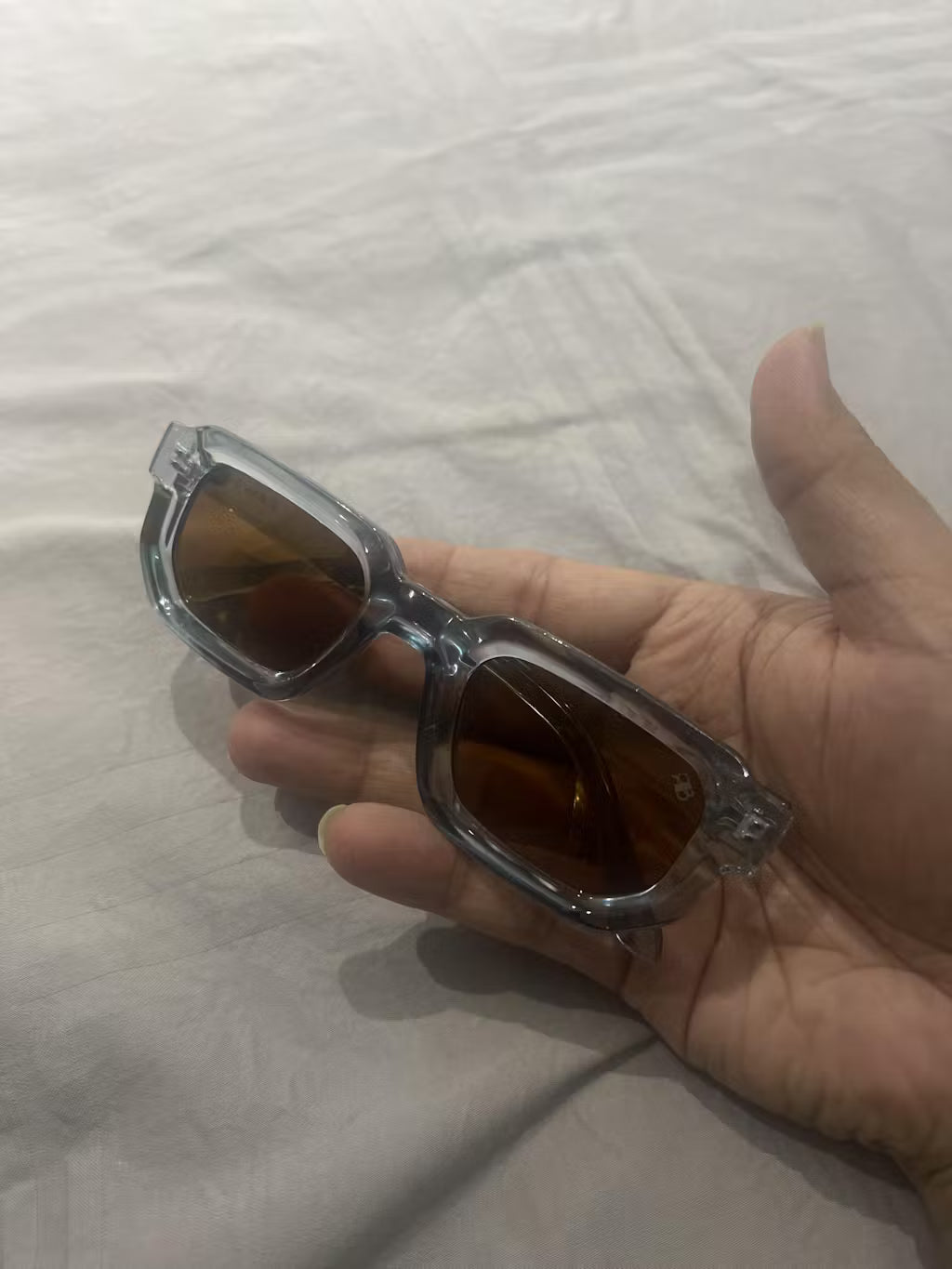
Vintage Cube — Blue Tea
Polarized • UV400 • Rectangle
View Frame

Glare — Cheetah
Polarized • UV400 • Rectangle
View Frame

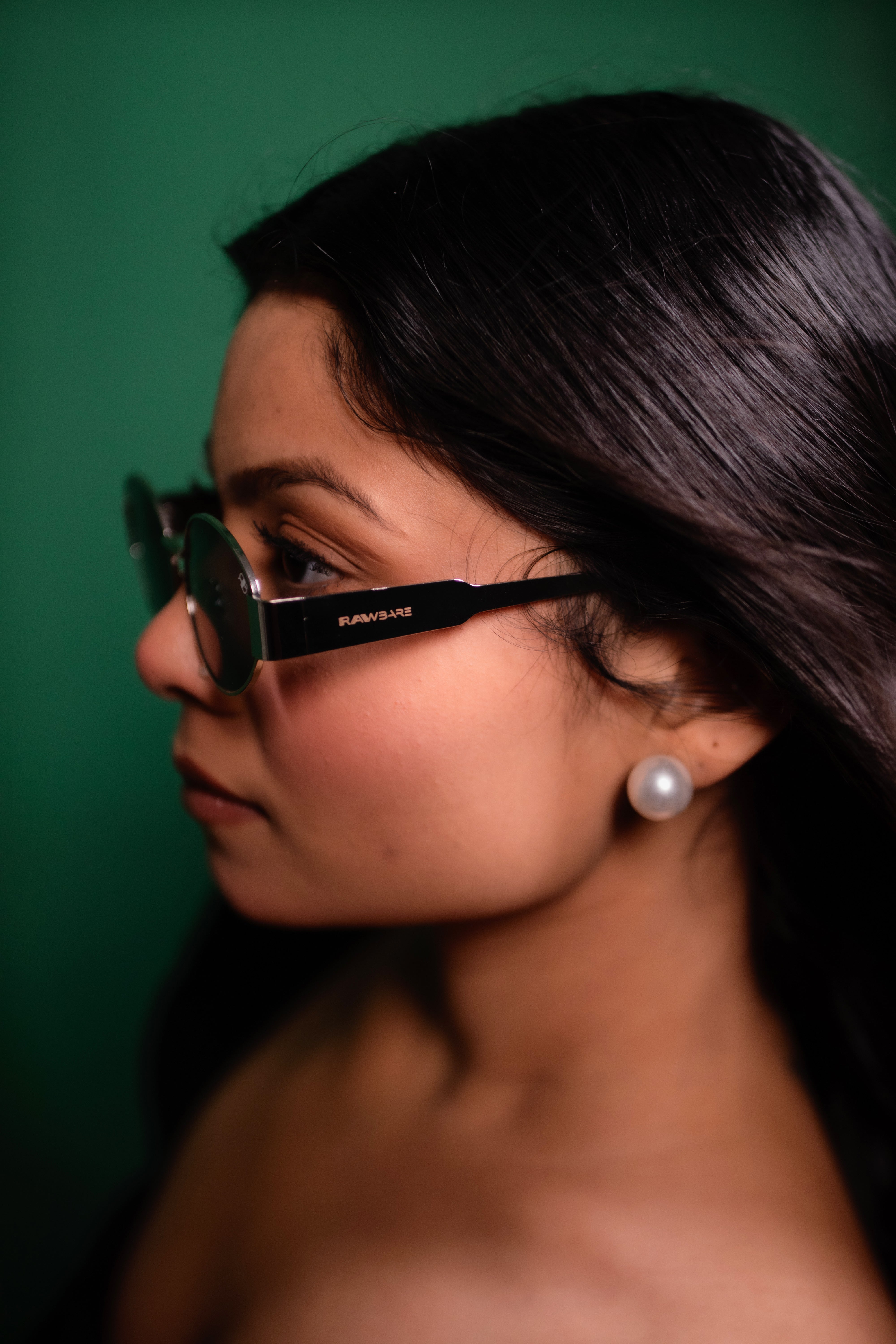
Jaisalmer Glow — Jade
Polarized • UV400 • Oval
View Frame
Frequently asked questions
Q1 How can I tell if my sunglasses are truly polarized?
Take two pairs of supposedly polarized sunglasses and hold one lens in front of the other at 90 degrees rotation. Look through both lenses simultaneously. If both are genuinely polarized, the overlapping area will appear very dark or completely opaque. If no darkening occurs, at least one pair is not polarized.
Q2 Do polarized lenses also provide UV protection?
Polarization and UV protection are separate properties. A polarized lens does not automatically block UV rays. Quality polarized sunglasses combine both. Always verify that a polarized sunglass also carries UV400 certification.
Q3 Are polarized lenses better for driving in India?
Yes, with one caveat. Polarized lenses significantly reduce road surface glare on Indian roads, particularly in wet conditions. Note that some instrument panels and GPS screens may appear dark through polarized lenses at certain angles.
Q4 Why do polarized lenses make the world look darker initially?
They do reduce total light slightly. But the primary perceptual change is contrast improvement. By removing the bright baseline of glare, objects appear sharper and more colour-accurate. Most wearers adjust within a few minutes.
Q5 Does polarization wear off over time?
The polarizing PVA film is laminated inside the lens, not applied as a surface coating. It does not wear off with normal use. Prolonged extreme heat or harsh chemicals can degrade the film over time, but normal use preserves it for the lifetime of the frame.
Q6 Can polarized lenses be made in prescription?
Yes. The PVA polarizing film is laminated into the lens blank before the prescription curvature is ground. The polarizing effect remains fully functional in prescription polarized lenses.
Key takeaways
✓ Glare is horizontally polarised reflected light from flat surfaces like roads and water
✓ Brewster's Angle explains why flat outdoor surfaces produce maximum glare at typical sun angles
✓ Polarized lenses contain vertically aligned PVA molecules that absorb horizontal light waves
✓ Quality polarized lenses block 95 to 99% of reflected glare while allowing useful light through
✓ The PVA film is stretched to 4 to 6 times its length during manufacturing
✓ Polarization and UV400 are separate properties — always verify your lenses carry both
✓ LCD screens may appear dark through polarized lenses at certain angles
✓ The polarizing film is laminated inside the lens and does not wear off with normal use