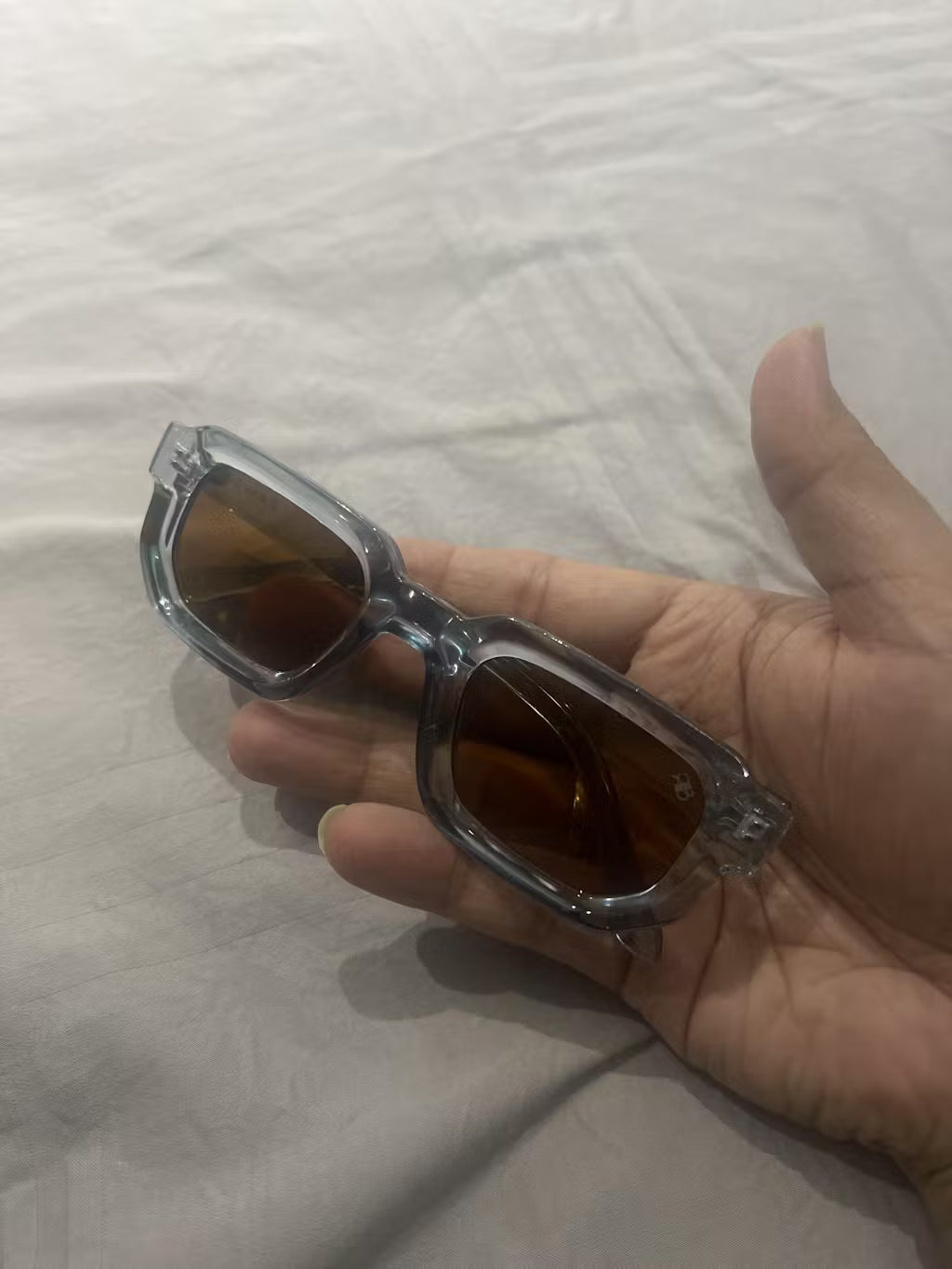
How Heavy Should Sunglasses Be? A Weight Guide for Comfortable Wear
Fit and Comfort
How Heavy Should Sunglasses Be? A Weight Guide for Comfortable Wear
Weight is rarely listed when you buy sunglasses, but it decides whether you forget you are wearing them or take them off after an hour. Here is what makes a pair heavy and how to choose one you can wear all day.
In this article
- How heavy should sunglasses be?
- What makes sunglasses heavy?
- What problems does a heavy pair cause?
- How can you check the weight of sunglasses?
- How do you choose a lighter pair?
- Lighter-feeling Rawbare frames to consider
- Frequently asked questions
How heavy should sunglasses be?

Light enough that they leave no deep red marks on your nose and do not slide down after an hour. There is no official limit, but the lighter the pair, the more evenly its weight is spread, the more comfortable it feels over a full day.
Optical retailers note that heavier frames are linked with more contact pressure on the nose and behind the ears. How that weight is spread matters as much as the total. A heavier pair with a wide, well-shaped bridge can feel better than a lighter pair that rests on two thin points.
What makes sunglasses heavy?

Three things: lens material, lens size and frame material. Lenses are often the heaviest part of a pair.
| Lens material | Approx. density (g/cm³) | Weight effect |
|---|---|---|
| Trivex | 1.11 | Lightest |
| Polycarbonate | 1.20 | Very light |
| CR-39 plastic | 1.32 | Light |
| Mineral glass | About 2.5 | Roughly twice as heavy |
Glass lenses resist scratches well, but at the same size and thickness they weigh about twice as much as plastic lenses. See what sunglasses lenses are made of.
- Lens size: large and oversized lenses add weight at the front, which pulls the pair down the nose.
- Frame material: thick acetate is usually heavier than TR90, thin metal or nylon frames. See frame materials explained.
- Hardware: large hinges, metal trims and decorative bars add small amounts that add up.
What problems does a heavy pair cause?

Red marks or soreness on the nose, frames slipping down, pressure behind the ears and, for some people, headaches over long wear.
The nose carries most of the weight of sunglasses. When a pair is front-heavy, it slides down, so you push it back up, often hundreds of times a day. In heat and sweat, slipping gets worse. Read can sunglasses cause headaches and how to fix sunglasses that do not fit.
How can you check the weight of sunglasses?

Weigh them on a kitchen scale, then compare with a pair you find comfortable. If you are buying online, compare frame type, lens size and material instead.
How do you choose a lighter pair?

Choose plastic lenses over glass, moderate lens size over oversized, and a TR90, nylon or thin metal frame over thick acetate.
- For all-day city wear: medium lenses and a light plastic or metal frame.
- For sport and riding: wrap frames in light plastic that grip without pressure. See wrap-around sunglasses.
- For low nose bridges: adjustable nose pads spread weight and stop slipping. See sunglasses for low nose bridges.
- For travel: light frames are easier to wear on long journeys. See travel sunglasses.
Lighter-feeling Rawbare frames to consider
Moderate lens sizes and slim or sport frames. Compare sizes on each product page against a pair you already wear comfortably.


Frequently asked questions
Q1 How heavy should sunglasses be?
Q2 Are glass lenses heavier than plastic?
Q3 Why do my sunglasses keep sliding down?
Q4 Can heavy sunglasses cause headaches?
Q5 Are metal sunglasses heavier than plastic?
Q6 How do I check sunglasses weight when buying online?
Key takeaways