Should You Wear Sunglasses Indoors? What It Does to Your Eyes
Eye Comfort
Should You Wear Sunglasses Indoors? What It Does to Your Eyes
Some people keep their sunglasses on in offices, malls and even at home because indoor light feels harsh. It feels like relief. Over time it can make the problem worse. Here is why, and what to do instead.
In this article
- Is it bad to wear sunglasses indoors?
- Why can wearing sunglasses indoors make light sensitivity worse?
- When does it make sense to wear sunglasses indoors?
- When should you not wear them indoors?
- What should you use instead for indoor glare and screens?
- Clear-lens Rawbare frames for indoor wear
- Frequently asked questions
Is it bad to wear sunglasses indoors?

Occasionally, no. Regularly, it is not recommended. Dark lenses indoors do not damage the eye, but they train your eyes to expect less light, which can make ordinary indoor lighting feel even harsher when you take them off.
Sunglasses are designed for outdoor light, which is many times brighter than indoor light. A well-lit office is a small fraction of the brightness of a sunny street. Putting a dark filter over an already dim environment cuts the light reaching your eyes far below what they need to see detail comfortably.
Why can wearing sunglasses indoors make light sensitivity worse?

Because of dark adaptation. When your eyes spend long periods in dim light, they become more sensitive to light. Normal brightness then feels uncomfortable, which pushes people toward even darker lenses.
Your eyes adjust constantly to the light around them. Walk out of a cinema into daylight and the brightness feels overwhelming for a few moments. That is dark adaptation reversing. Wearing dark glasses indoors keeps your eyes in a partly dark-adapted state for hours at a time.
Clinical guidance on light sensitivity (photophobia) reflects this. Guidance from NHS Scotland on light sensitivity after brain injury advises that tinted lenses or sunglasses in normal indoor light are likely to increase sensitivity and should be avoided unless a professional recommends them. UK optician guidance on photophobia makes the same point: sunglasses can help outdoors, but wearing them indoors can make the problem worse.
When does it make sense to wear sunglasses indoors?

For short periods with a clear reason: after an eye examination with dilating drops, after some eye procedures on your doctor's advice, during a migraine attack, or in a bright, sunlit indoor space such as a glass atrium.
- After pupil dilation: dilating drops leave your eyes unable to control how much light enters for several hours. Sunglasses help, indoors and out.
- After eye surgery: follow your surgeon's instructions. See sunglasses after LASIK, cataract or eye surgery.
- During a migraine: temporary relief during an attack is reasonable. Wearing them all day between attacks is not recommended.
- Very bright indoor spaces: sunlit lobbies, glass-roofed malls or a seat beside a large window in direct sun.
- Eye infections or irritation: short-term comfort while you get it treated.
When should you not wear them indoors?

Do not make sunglasses your default for ordinary indoor lighting, screens or night-time use. Dark lenses reduce contrast and detail in dim conditions and can make steps, kerbs and obstacles harder to see.
This matters most on stairs, in parking basements, in cinemas and at night. In low light, a dark lens can turn a small step into something you simply do not see. If you need tinted lenses in these conditions, the cause of your light sensitivity should be checked. The same logic applies outdoors after sunset; read can you wear sunglasses at night.
| Situation | Sunglasses indoors? |
|---|---|
| After dilating eye drops | Yes |
| Migraine attack, short term | Reasonable |
| Sunlit glass atrium | Reasonable |
| Office lighting all day | Not recommended |
| Screen work | Not recommended |
| Stairs, basements, night | Avoid |
What should you use instead for indoor glare and screens?
Treat the cause of the discomfort first, then use a light, clear or near-clear lens if needed rather than a dark tint.
If screens are the main trigger, read digital eye strain: signs, causes and fixes and the best sunglasses for light-sensitive eyes for outdoor use.
Clear-lens Rawbare frames for indoor wear
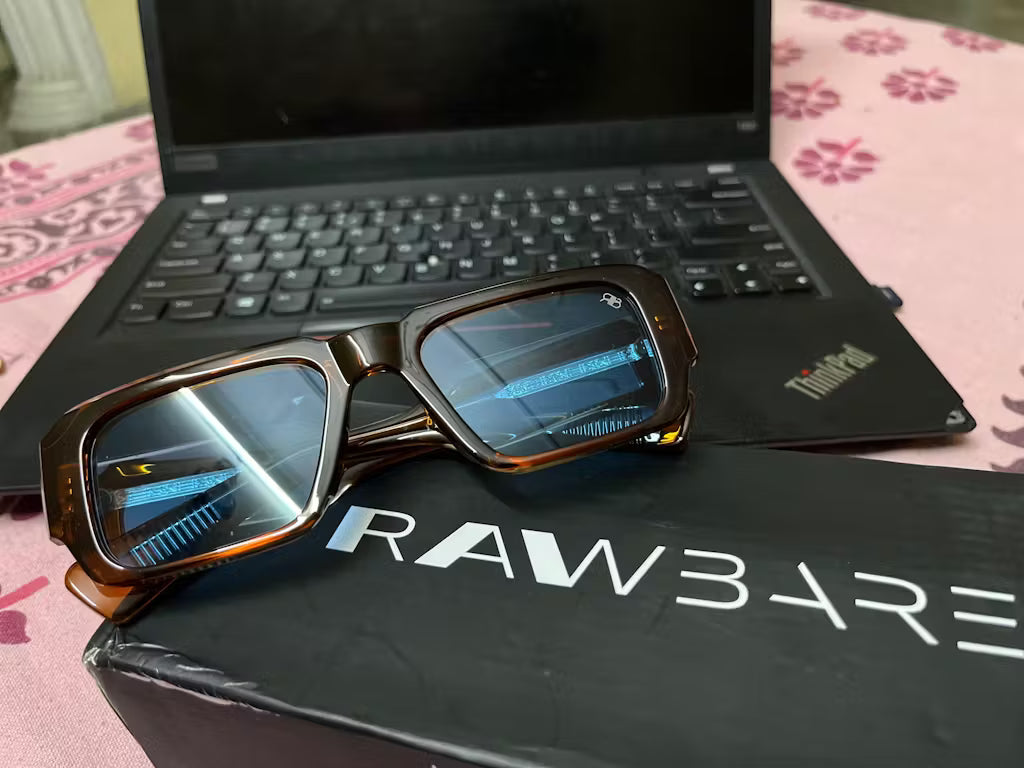
For long indoor and screen hours, a clear blue-cut lens keeps your eyes in normal light while cutting reflections. These frames are in stock.


Frequently asked questions
Key takeaways
Sources
- NHS Scotland, Acquired Brain Injury Education: Light sensitivity
- Specsavers UK: Photophobia (light sensitivity)
- MedlinePlus (US National Library of Medicine): Photophobia
- All About Vision: Photophobia (light sensitivity)