Sunglasses for Sensitive Skin and Metal Allergy: Choosing a Frame That Does Not Irritate
Frame Materials
Sunglasses for Sensitive Skin and Metal Allergy: Choosing a Frame That Does Not Irritate
If your skin turns red or itchy where your sunglasses sit, the frame may be the cause. Nickel is the most common culprit, but not the only one. Here is how to tell, and how to choose a frame your skin can live with.
In this article
- Can sunglasses cause a skin allergy?
- Why is nickel the most common problem?
- How do you know if your frame is the cause?
- Which frame materials are best for sensitive skin?
- How can you avoid a reaction with the frames you own?
- Rawbare full-rim frames to consider
- Frequently asked questions
Can sunglasses cause a skin allergy?

Yes. Frames can cause allergic contact dermatitis where they touch the skin, usually behind the ears, on the bridge of the nose or on the cheeks. Nickel in metal frames is the most common cause, but dyes, rubbers and plastic additives can also trigger it.
Allergic contact dermatitis is a delayed reaction. The skin becomes sensitised to a substance, and later contact causes redness, itching, dryness or small bumps in the exact area that touched it. Because sunglasses are worn for hours, often in heat and sweat, the contact is long enough to cause problems for people who are sensitive.
Why is nickel the most common problem?

Nickel is the most frequent contact allergen worldwide, and it is widely used in metal frames, hinges, screws and plated finishes. Sweat helps release nickel from metal onto the skin.
Large patch-testing studies consistently rank nickel as the leading contact allergen, with reactions more common in women, partly because of earlier exposure through jewellery. A study published in the Indian Journal of Dermatology, Venereology and Leprology, testing everyday items with the dimethylglyoxime (DMG) spot test, which turns pink when free nickel is present, found that around half of the spectacle frames tested released free nickel.
A Korean study of 42 patients with dermatitis at the spectacle contact site found nickel released from 78.5% of their frames. The skin-contact areas also showed more fine scratches than the rest of the frame. The authors concluded that wear and scratches on plated metal can expose the nickel underneath, which helps explain why a pair that was fine for months can start causing a reaction.
Labels are not always reliable either. Case reports in dermatology journals describe reactions to frames sold as nickel-free, and a review of spectacle-frame allergens noted that some so-called hypoallergenic alloys contain significant nickel.
How do you know if your frame is the cause?

The rash appears where the frame touches, improves when you stop wearing that pair, and returns when you wear it again. A dermatologist can confirm a nickel allergy with a patch test.
- Location: behind the ears where the temple tips rest, on the nose under the nose pads or bridge, or on the cheekbones.
- Timing: it usually appears a day or two after wearing, not immediately.
- Pattern: it worsens in hot, humid weather when you sweat more.
- History: you have reacted to earrings, watch backs, belt buckles or jeans buttons before. This is a common sign of nickel sensitivity.
- Visible wear: scratched, chipped or worn plating on the parts that touch your skin.
Which frame materials are best for sensitive skin?

Full-plastic or acetate frames with no exposed metal where they touch the skin are the simplest choice. Among metals, pure titanium and surgical-grade stainless steel are less likely to cause a reaction than nickel alloys or plated base metals.
| Material | Suitability for nickel-sensitive skin |
|---|---|
| Acetate / plastic, no exposed metal | Good |
| TR90 and similar nylon blends | Good |
| Pure titanium | Good |
| Surgical-grade stainless steel | Usually fine |
| Plated or coated base metal | Risky as plating wears |
| Monel and nickel alloys | Avoid |
Even a plastic frame usually has small metal parts: hinge screws, and sometimes a metal core inside the temples. Most of these do not touch the skin. What matters is what sits against your skin for hours: the temple tips, the nose pads or bridge, and any metal trim on the front. Compare materials in eyewear frame materials explained.
How can you avoid a reaction with the frames you own?
Reduce skin contact with the metal, keep the frame clean and dry, and replace worn parts.
Rawbare full-rim frames to consider
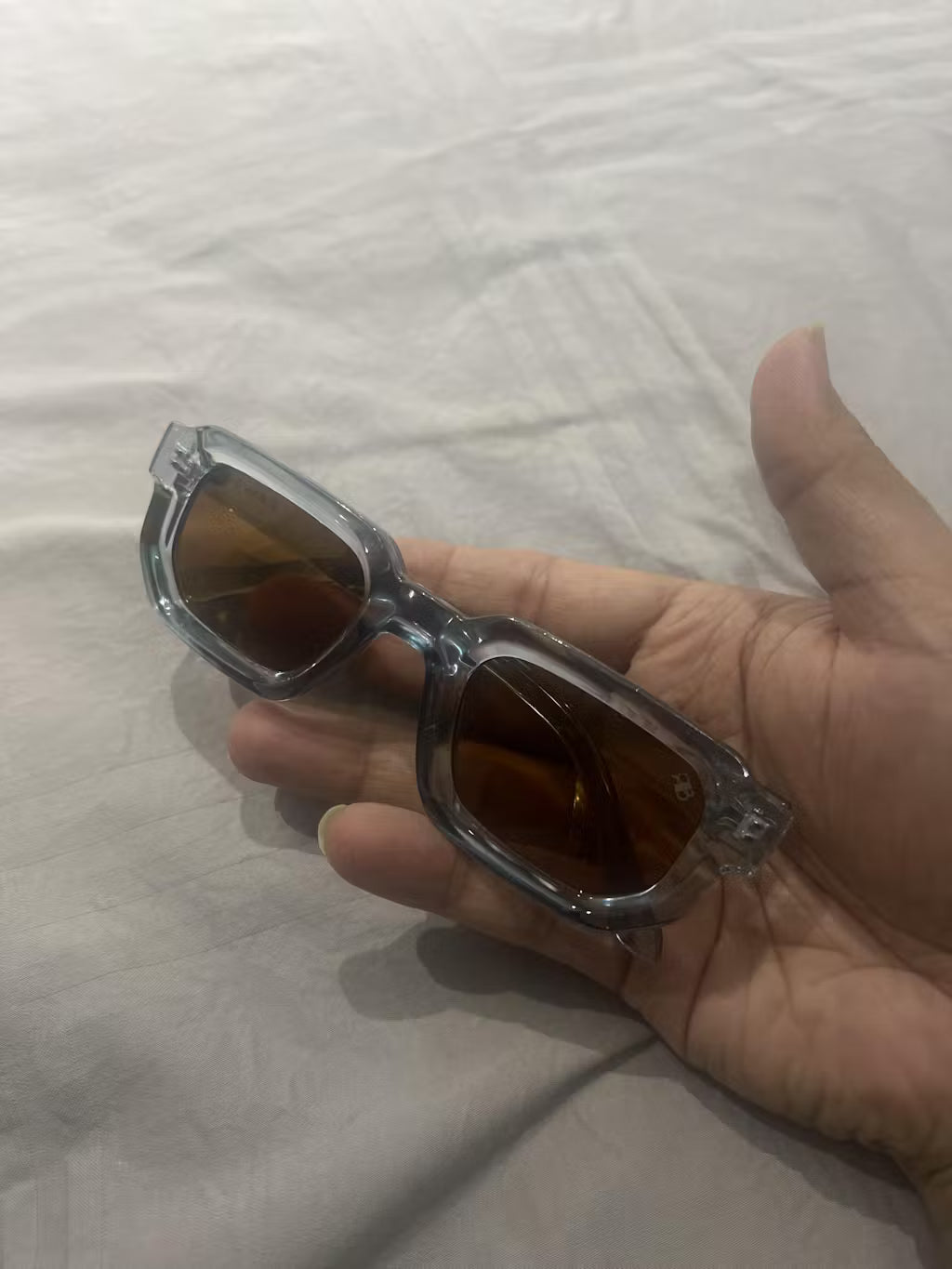
These full-rim styles are a good starting point to compare. If you have a confirmed nickel allergy, ask customer care to confirm the material of each part that touches your skin before ordering.


Frequently asked questions
Key takeaways
Sources
- Kim et al. The fine scratches of the spectacle frames and the allergic contact dermatitis. Annals of Dermatology, 2013
- Indian Journal of Dermatology, Venereology and Leprology: Nickel nuisance, a clinical observation
- Eyeglass allergic contact dermatitis. Dermatology Online Journal
- Allergic contact dermatitis to nickel in ophthalmic frames. Journal of Current Science and Technology