
What does UV400 actually mean? A plain-English breakdown
UV Protection · Plain English
What does UV400 actually mean? A plain-English breakdown
UV400 is on every decent pair of sunglasses — but most people who buy it cannot explain what it means. This is the complete, jargon-free explanation.
In this article
- What UV400 means exactly
- UVA vs UVB — what is the difference
- UV400 vs 100% UV protection — same thing?
- Dark lenses and UV — the myth
- Does UV400 protect against blue light?
- How to verify your sunglasses have UV400
What UV400 means exactly

UV stands for ultraviolet — a form of electromagnetic radiation with wavelengths shorter than visible light. The human eye cannot see UV, but the cells of the eye and eyelid absorb it. Long-term absorption causes damage.
The 400 in UV400 refers to 400 nanometres — the wavelength at which ultraviolet light ends and visible light begins. UV400 labeling means the lens blocks all UV radiation from 0 to 400nm: 100% of both UVA and UVB rays.
UVA vs UVB — what is the difference
| Type | Wavelength | Effect on eyes | Penetration |
|---|---|---|---|
| UVA | 315–400nm | Cataracts, macular degeneration — long-term cumulative damage | Penetrates deep into the eye, passes through clouds and glass |
| UVB | 280–315nm | Photokeratitis (corneal sunburn), acute damage | Mostly absorbed by the atmosphere but significant at high altitudes and near water |
UV400 blocks both. Sunglasses that only specify UV protection without the 400 standard may only partially block one or both types.
UV400 vs 100% UV protection — same thing?

Use either label to confirm protection. What you want to avoid is any sunglasses with no UV labeling at all, or vague labels like UV resistant without a percentage or standard.
Dark lenses and UV — the myth

The UV blocking comes from an invisible coating applied to the lens — not from the tint. A completely clear lens with UV400 coating protects your eyes identically to a dark lens with the same coating.
Does UV400 protect against blue light?

No. UV400 and blue light protection are two separate things. UV radiation sits at 0–400nm — invisible to the human eye. Blue light sits at 400–500nm — the lower end of the visible spectrum. They require different coatings.
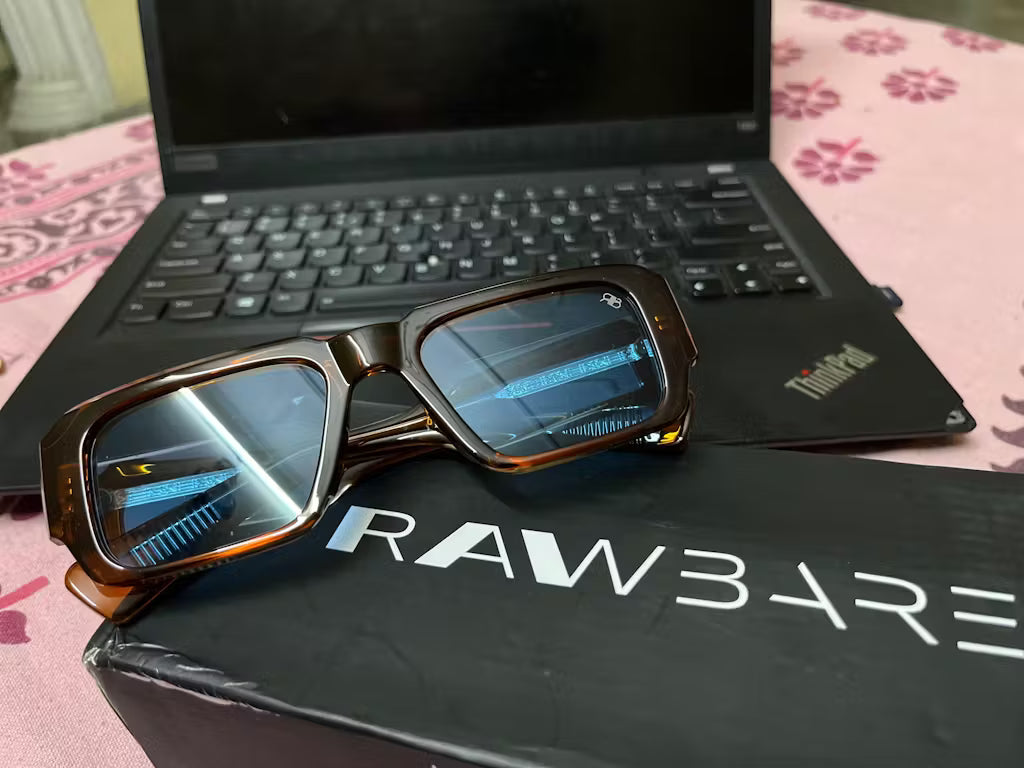
Rawbare offers dedicated blue-cut frames — the Timeless Bluecut RB2446 and Rogue Shades Bluecut RB2533 — which add blue light filtering on top of standard UV400 protection.
How to verify your sunglasses have UV400

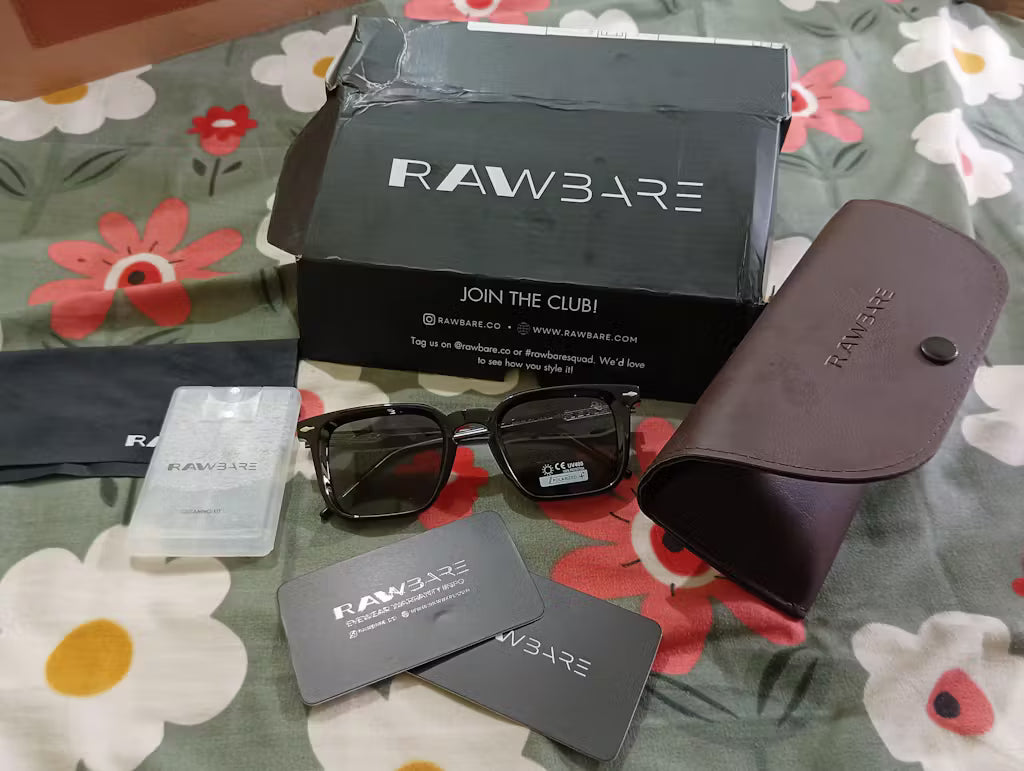
Check the product tag, sticker, or description for explicit UV400 or 100% UV protection labeling. If the product says only UV protection with no standard or percentage, it may offer partial or no protection. All Rawbare sunglasses include UV400 as a standard across every frame from Rs.799 upward — verified, not aspirational.
Key takeaways
Frequently asked questions